Kostyonki museum, Archaeological museum in Khokholsky District, Russia.
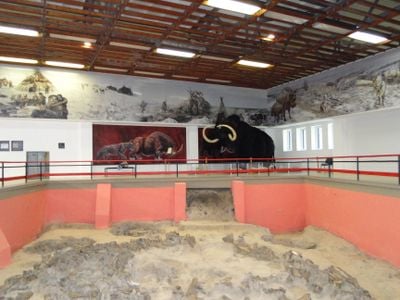
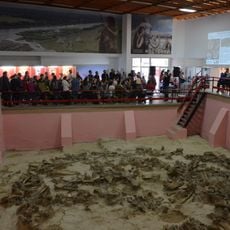
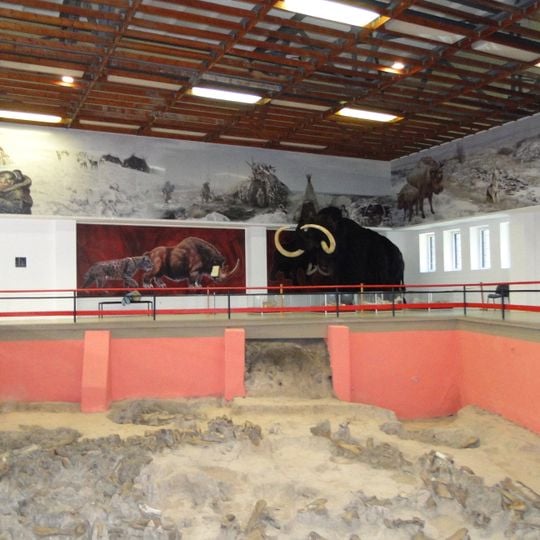
The Kostyonki Museum is a concrete building erected in 1979 directly over the Kostenki-11 site, a dwelling about 20,000 years old. Inside, a single hall with a pitched wooden roof and rows of ceiling lights encloses a central excavation pit ringed by a thin metal railing. The pit walls are painted salmon pink, and its grey-brown floor is scattered with bones. Pale murals of prehistoric animals and people cover the walls, beside two framed panels of brown mammoths on dark red.
The site was first examined in the early 1700s and revealed several Paleolithic settlement locations in the area. Since then, evidence shows that people lived at different spots in this region over a span of forty thousand years.
The museum tells the story of how people lived and worked in this region during prehistoric times through the objects they left behind. Visitors can observe how ancient residents created their tools and organized their daily activities.
The museum is best visited with a guide who can explain the excavation site and collections. Visitors should be prepared for paths across the grounds and dress appropriately for the season.
Scientists were able to extract DNA from the remains of a person who lived in this area about 30,000 years ago. This genetic information revealed details about the origins and migration routes of these early populations.
The community of curious travelers
AroundUs brings together thousands of curated places, local tips, and hidden gems, enriched daily by 94,497 contributors worldwide.