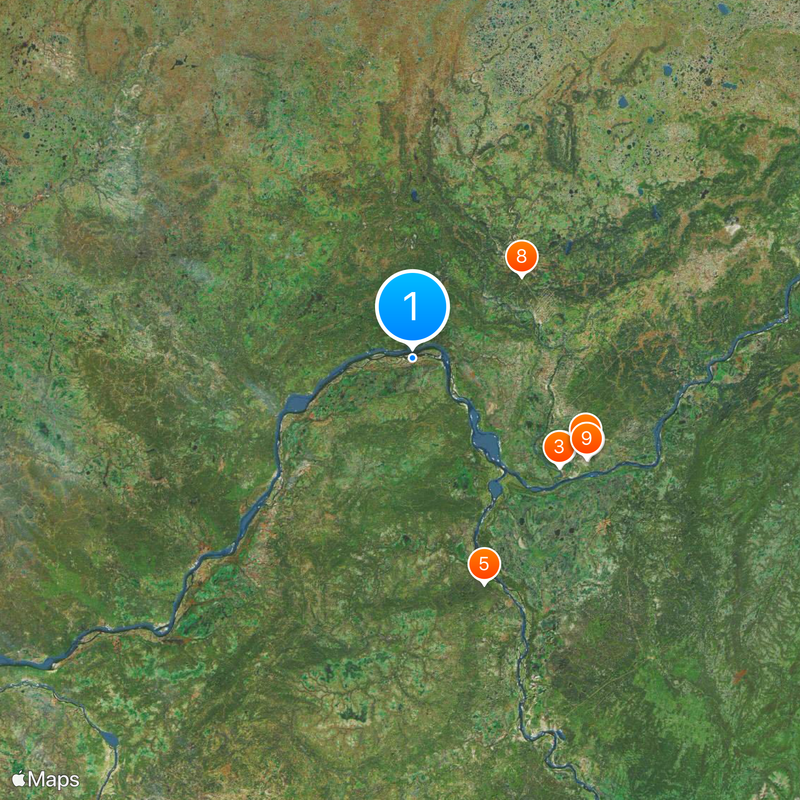
West Siberian Glacial Lake, Ancient glacial lake in Western Siberia, Russia.
This former body of water once covered much of the West Siberian Plain, fed by meltwater from retreating glaciers. The volume reached dimensions comparable to modern ocean basins, with sediment deposits spread over an area larger than several present-day European countries combined.
Ice masses blocked northward drainage during the last ice age, creating a huge freshwater basin. Water later found an outlet through southern routes, connecting Siberian waters with warmer regions.
The lake's presence influenced early human settlement patterns and contributed to the development of diverse ecological systems that supported indigenous communities.
The terrain today shows wide flat plains with wetlands and marshes marking the former lakebed. Visitors exploring this region should expect remote conditions and limited infrastructure, as the area remains sparsely populated.
Sediments at the bottom document climatic shifts over millennia and offer insight into ice age environmental conditions. These geological layers contain organic material now studied to reconstruct earlier ecosystems.
The community of curious travelers
AroundUs brings together thousands of curated places, local tips, and hidden gems, enriched daily by 91,246 contributors worldwide.