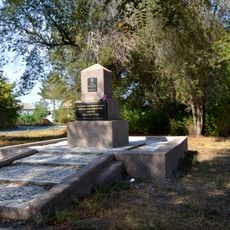
Orsk Fortress, Military fortification in Orsk, Russia.
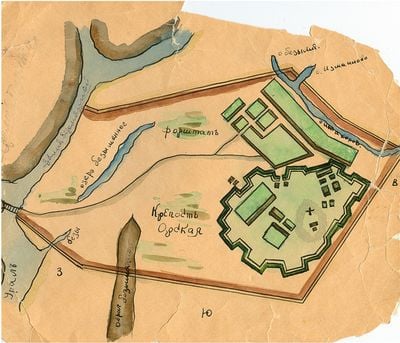
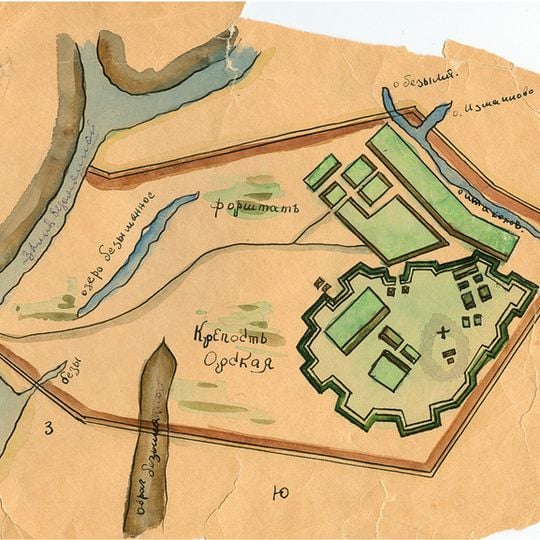
Orsk Fortress was laid out in August 1735 as a rectangular earthwork about 300 by 250 metres, with a two-metre ditch, ramparts with corner bastions, two gates and a wattle fence along the crest. A wooden citadel with a palisade stood on Preobrazhenskaya Hill; in 1742 it was enlarged with a three-metre rampart, four bastions and two half-bastions and named the Preobrazhensky Castle. The church of Andrew the First-Called stood in the centre, where the Industrial College now is.
The fortress was founded in 1735 during an expedition led by Ivan Kirilov and became a key outpost for Russian expansion into the southern Ural region. It played a crucial role in settling and securing this distant area during the 18th and 19th centuries.
The fortress served as a place of exile and confinement during the 19th century, holding political prisoners and banished individuals. This role made it a symbol of state control in the distant regions of the empire.
The fortress site lies in the Staraya Orsk district, where the remains of the earthen ramparts and ditches are visible in the terrain. The former citadel stood on Preobrazhenskaya Hill, now marked by the 1751 semi-stone Preobrazhenskaya Church. The old exchange yard, built about 500 m away in 1738, is today the Old Town market.
The fortress was the only one on the Orsk distance line that Pugachev's detachments never attacked during the 1773–1774 uprising. Two light field commands of about 1,000 men under General Stanislavsky stayed inside for over five months instead of relieving besieged Orenburg; Pushkin wrote that Stanislavsky acted irresolutely and returned to his beloved Orsk Fortress.
The community of curious travelers
AroundUs brings together thousands of curated places, local tips, and hidden gems, enriched daily by 94,369 contributors worldwide.