Ingala Valley, Archaeological site in Isetsky District, Russia.
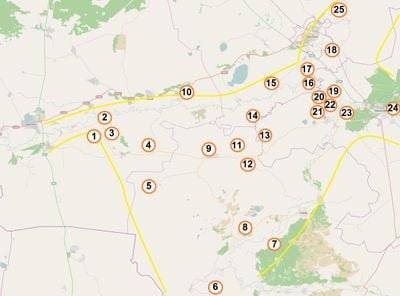
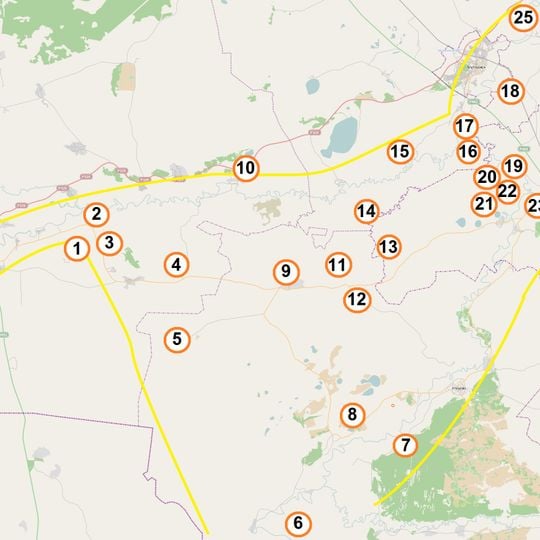
Ingala Valley is an archaeological district in the Tobol–Iset interfluve, 75 km south of Tyumen, covering about 1,500 km². On a map it forms a trapezoid with its apex pointing northeast, about 55 km north to south and 20–45 km east to west. The Borovaya Ingala and Bolshaya Ingala rivers flow through its centre, and its northern and eastern edges are bounded by high river terraces.
The valley was used for burials and settlements by different peoples over many centuries, with traces going back to the medieval period and earlier. From the 17th century onward, grave robbers dug up many of the burial mounds and took the objects they found, destroying much of the record before any systematic study could take place.
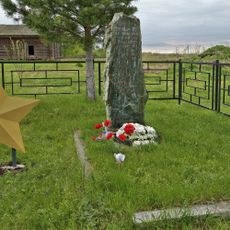
The Ingala Valley sits between two rivers and was used over centuries by different peoples who buried their dead and built settlements here. Walking through the area today, you can still spot the low mounds rising from the ground that mark ancient burial sites.
The site is a protected area, so visitors are expected to stay on marked paths to avoid damaging the buried remains and mounds. The terrain is open and can be uneven, so sturdy footwear and enough time to walk through the different zones are worth planning for.
Some objects recovered from the valley came from regions far to the south and east, suggesting the area was connected to long-distance trade routes in ancient times. What is less obvious is that the valley's trapezoid shape comes entirely from natural river banks, not from any human construction.
The community of curious travelers
AroundUs brings together thousands of curated places, local tips, and hidden gems, enriched daily by 94,061 contributors worldwide.