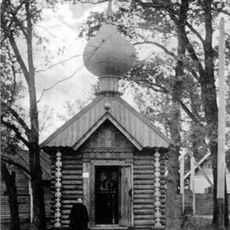
Bip Fortress, Military fortress in Pavlovsk, Russia
Bip Fortress is a late 18th-century fortification located within Marienthal Park, featuring military architectural elements and defensive structures characteristic of the Russian Empire period. The structure displays typical fortress features including earthen ramparts, bastions, and protective works that formed its defensive system.
Paul I had a wooden Dutch-style hunting lodge called Mariental built on this spot; in 1795 he replaced it with a pleasure castle, works led by D. Quadri and lasting two years, with the design usually credited to Vincenzo Brenna. Paul attached it to the military department with 28 artillery pieces, and it stayed on the empire's fortress register until 1811. A plaque on the rampart states it was made by Swedish general Cronhjort in 1702, retreating after defeat by okolnichy Apraksin.
The name Bip comes from the barons "Bibs, Balm, Krik and Krak" mentioned in a French-language play staged in Pavlovsk Park before construction; Maria Feodorovna already wrote of "the Bip castle" in an 1813 letter to Karamzin. In Soviet times the name was read as an abbreviation: "Bastion of Emperor Paul" or "Paul's Big Toy".
Visitors can reach the fortress by following marked paths through Marienthal Park from the main entrance. The site is well-positioned for walkers and can be accessed as part of a broader park exploration.
A plaque from Paul I's era survives at the site, recording that the rampart was the remnant of a fortification built by Swedish general Kronhjort in 1702, when he retreated through this post toward Dudorova Gora after being defeated by okolnichy Apraksin.
The community of curious travelers
AroundUs brings together thousands of curated places, local tips, and hidden gems, enriched daily by 94,052 contributors worldwide.