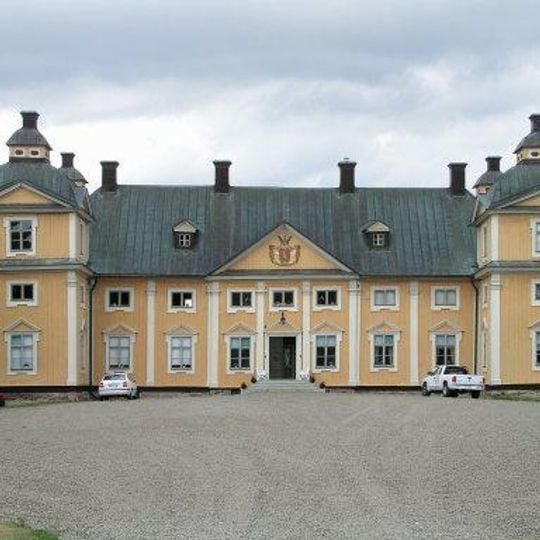
Gripenberg Castle, Wooden baroque castle in Tranås Municipality, Sweden.
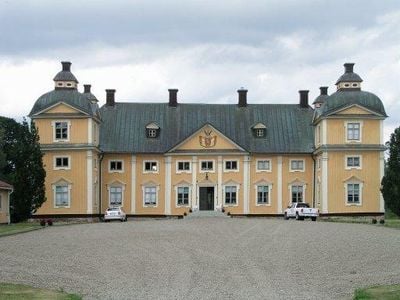
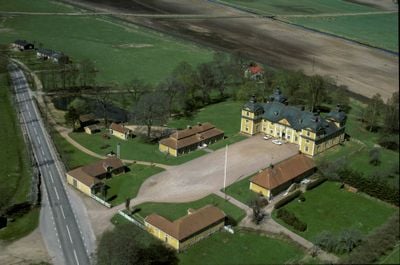
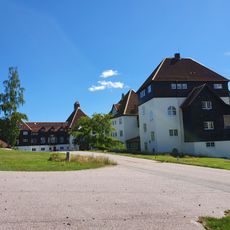
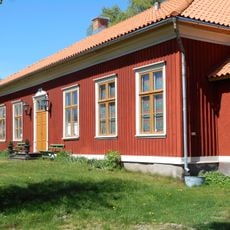
Gripenberg Castle is a wooden baroque manor near Tranås in Småland, built 1663–1667. It has a broad main block with tower structures at the four corners and eight single-storey wings housing residences, warehouses and storerooms. The main building was originally red with grey pilasters and shingle roofing; just before 1780 it was clad in board panel painted yellow. The west wing, with a säteri roof, was moved here from Mörbylund manor after the west wing burned down in the early 18th century.
Carl Gustaf Wrangel began building Gripenberg in 1663 after long disputes with the tax-paying peasants of Åby village, who refused to sell their land; the castle was finished in 1667. Nicodemus Tessin the Elder probably designed it, though this is not certain, and Hendrich Anundsson, builder at Skokloster, was master builder. Wrangel visited only once, in 1669.
The name Gripenberg comes from Margareta Grip, Carl Gustaf Wrangel's mother. From 1841, under Axel Hermelin and his wife Eugenia Fjellstedt, the estate hosted revivalist meetings and became a centre of the free-church movement; the owners also supported temperance and popular education, and a "sämjeskola" was started for statare farm labourers.
The estate is still owned by the Hermelin family, descendants of Samuel af Söderling, and is not open to visitors. The castle stands outside the village of Gripenberg in Tranås Municipality, Jönköpings län. View it from the public road and respect private boundaries.
The west wing, with its säteritak roof, was originally the main building of Mörbylund manor; it was moved here after Gripenberg's own west wing burned down in the early 18th century, when Mörbylund became a barn under Gripenberg. Eight single-storey wings surround the main block, and the estate holds an extensive farm museum.
The community of curious travelers
AroundUs brings together thousands of curated places, local tips, and hidden gems, enriched daily by 95,323 contributors worldwide.