Anundshög, Ancient burial ground near Västerås, Sweden
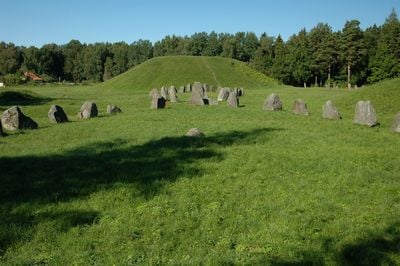
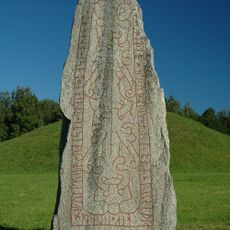
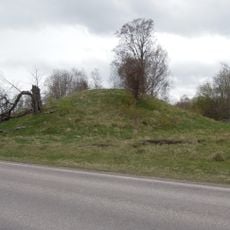
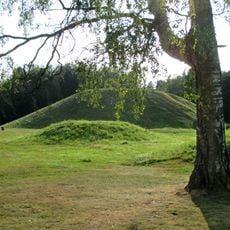
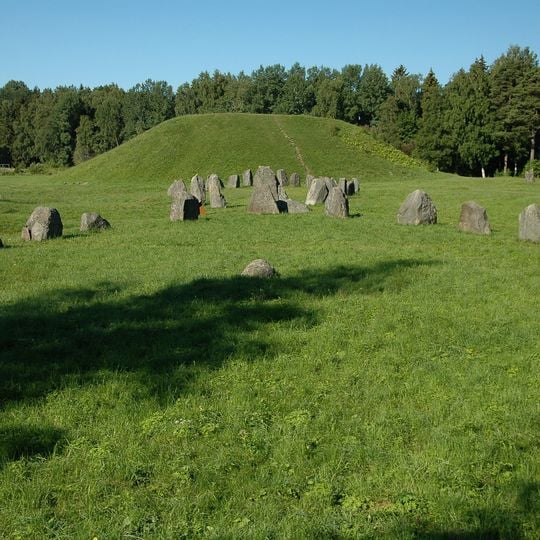
Anundshög is a grass-covered burial mound at the western edge of an archaeological site near Västerås. It measures 64–68 metres in diameter and 9.2 metres high, with a flattened top reached by a wooden staircase. In front of it stand about fifteen irregular grey standing stones, and a runestone, Vs 13, lies between the second and third stones from the south-western end.
Charcoal from a hearth at the base of the mound was radiocarbon dated to AD 210–540, placing its construction in the Migration Period to Viking Age. Medieval documents record that assemblies were held here in the 14th century, and excavations in 2017–2018 uncovered the remains of a medieval thing house. In 1788 robbers dug into the flattened top; the damage was repaired in the 1970 restoration.
The runestone at the site carries an inscription documenting family bonds, showing how people honored their deceased through such monuments. This practice was part of the tradition of remembering loved ones and preserving their stories for future generations.
The site lies along the Badelunda ridge east of Västerås, with a walking trail running through the area. A wooden staircase leads up to the flattened top of the mound, whose slopes hold stones said to be left from the 1788 looting attempt. The ground is grass, so paths can be muddy after rain.
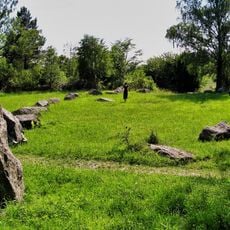
Two large stone ships measuring roughly 51 and 54 meters in length lie at the base of the mound and may have marked ancient ceremonial gathering spaces. Such stone formations are rare testaments to burial practices and possibly ritual activities of the Iron Age population.
The community of curious travelers
AroundUs brings together thousands of curated places, local tips, and hidden gems, enriched daily by 93,401 contributors worldwide.