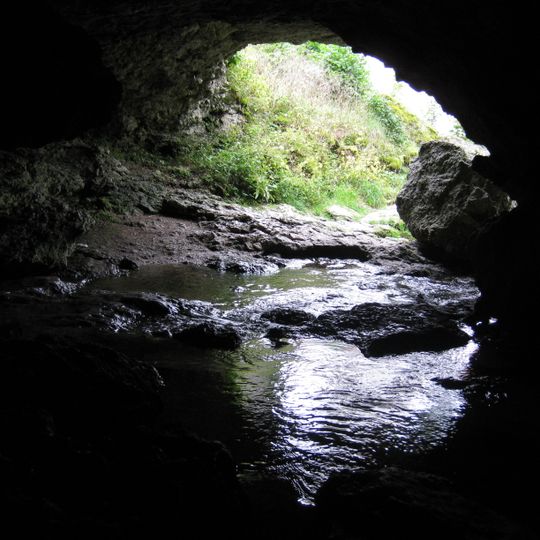
Lummelunda cave, Limestone cave in Lummelunds bruk, Sweden.
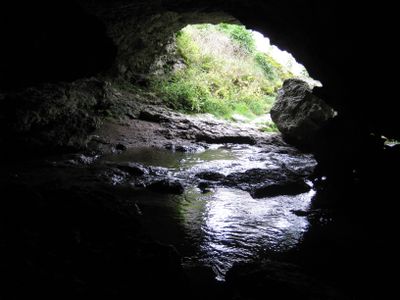
Lummelunda cave is a karst cave in limestone of the Lower Visby Formation, about 13 km north of Visby. Its explored passages run almost 4.5 km, divided into a dry fossil section with stalactites and a wet section where the Lummelundsån flows. The stream enters through a 1,150 m underground canal and drops 17 m from Martebo mire, exiting at the Klint near the coast.
The system was discovered and explored in the late 1940s by three teenagers using basic tools like matches and candles for light. This exploration led to scientific recognition and later documentation of the cave as a natural feature of the region.
Carl Linnaeus documented the cave system during his visit to Gotland in 1741, marking its early recognition in Swedish natural studies.
Visitors can join guided tours through designated sections of the cave and explore formations such as the Hall of the Mountain King. It is advisable to wear sturdy footwear and watch for uneven ground, as the floor can be slippery in places.
The cave's dry fossil section holds a large number of fossils and stalactite formations, while the active wet part still carries the underground stream. The explored passages total almost 4.5 km, making it one of Sweden's longest caves.
The community of curious travelers
AroundUs brings together thousands of curated places, local tips, and hidden gems, enriched daily by 93,783 contributors worldwide.