Svartsjö Palace, Rococo château in Svartsjö, Sweden
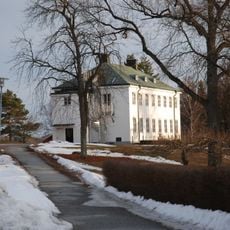
Svartsjö Palace is a two-storey Rococo building with a pale cream facade, a steep dark grey hipped roof and a central square tower topped by an open lantern with a domed cap and two round clock faces. Tall rectangular windows with yellow-brown frames line both floors, and two arched doorways with double wooden doors are reached by short stone steps. The central block was extended in 1773 with two wings on the short ends.
King Frederick I of Sweden commissioned the construction of this palace in 1734 to replace an older Renaissance structure destroyed by fire in 1687. The new building was designed by Carl Hårleman and reflected the wealth and power of the Swedish monarchy during that era.
The name Svartsjö means "Black Lake". In the palace park stands Drottning Kristinas lind, a lime tree traditionally planted in the 1620s by Gustav II Adolf. Beneath it is a white marble statue of Gustav II Adolf seated with Axel Oxenstierna, commissioned by Gustav III in 1784 in Italy and placed here the following year; it is the original, protected by a wooden cover in winter.
The palace stands on Färingsö, an island in Lake Mälaren that is reached by road from Stockholm; no boat is needed. The grounds are open for walks, and the dry moat east of the building is crossed by two stone arch bridges. The 1994–2003 restoration by the state left the facade and park maintained.
From 1891 to 1966, the building functioned as a prison where inmates initially worked in nearby granite quarries and later managed agricultural operations on the property. This unexpected conversion from royal residence to working penal institution marks a surprising chapter in the site's past.
The community of curious travelers
AroundUs brings together thousands of curated places, local tips, and hidden gems, enriched daily by 94,086 contributors worldwide.