Ismantorp Fortress, Migration Period ringfort in Öland, Sweden
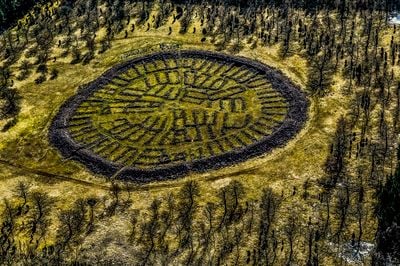
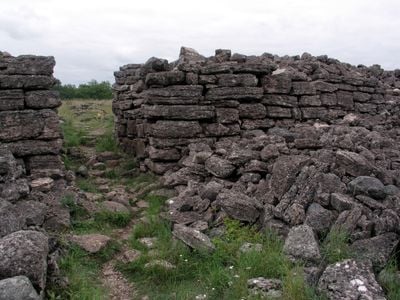
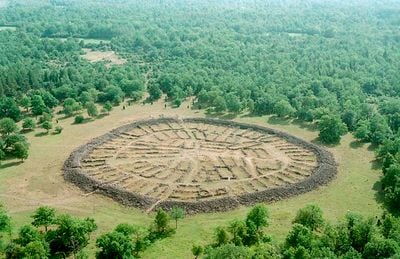
Ismantorp hill fort is a circular stone ringfort from the Migration Period on the Swedish island of Öland, marked by concentric stone walls with multiple gateways. The site contains well-defined house foundations scattered across the enclosed area, showing how structures once filled the space between the inner and outer rings.
Built around 200 CE during the Migration Period, Ismantorp was used only occasionally and abandoned around 650 CE. It is the largest and probably the oldest of Öland's roughly 20 ringforts. Carl Linnaeus visited the site on his journey through Öland.
The nine gates are unusually many for a defensive ringfort, which has led to theories that Ismantorp served as a market place, like Gråborg, or had a ritual use. The central round courtyard and the 95 house foundations arranged in blocks around it are features a visitor can still trace. Carl Linnaeus visited the fort during his journey through Öland.
The site sits within a forested area near Borgholm and is easily walkable, with visible stone boundaries that still mark the fort's outline today. Paths through the area allow visitors to trace the concentric rings and appreciate the scale of the original construction.
Archaeological research suggests the fort was likely never permanently inhabited despite its substantial size and complex layout. Instead, it may have served as a gathering place for markets, assemblies, or military training rather than as a residential settlement.
The community of curious travelers
AroundUs brings together thousands of curated places, local tips, and hidden gems, enriched daily by 94,292 contributors worldwide.