Norrmalmstorg, Pedestrian square in central Stockholm, Sweden
Norrmalmstorg is a spacious open square in central Stockholm surrounded by shops, restaurants, and cafes. It serves as a connecting hub where pedestrians gather and pass through different parts of the city center.
The square was called Packaretorget after a packing house where incoming fish was inspected and repacked, and sporadically Fiskartorget until the late 17th century. It took its present name in 1853, reviving a name previously tied to Gustav Adolfs torg. In 1992 the city decided to restore its earlier character; the rebuild cost about 11 million kronor and reinstated Holger Blom's patterned stone paving and copies of the 1911 Jugend-style lamp posts.
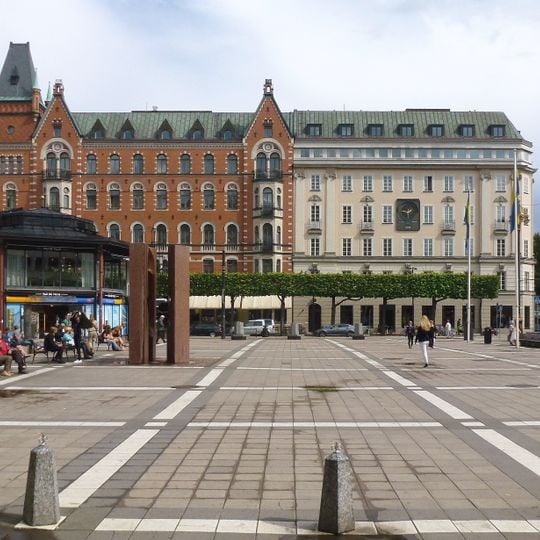
The name Norrmalmstorg was revived in 1853 from an older name for Gustav Adolfs torg. On the east side, a calendar clock by Linderoths urfabrik shows weekday, month and year as well as the time; it hung on Drottninggatan 28 until 1968 and was re-erected here in 1975. The Djurgården tram line has a terminus at the square, and the Palmhuset houses a café and a Pressbyrån kiosk.
The Djurgården tram line (Djurgårdslinjen) has one of its termini at the square, and Hamngatan and Biblioteksgatan meet here. The paving is flat, with lighter stone bands forming large rectangles across the grey slabs; two low stone bollards with metal caps stand near one edge. The Palmhuset, with a café and a Pressbyrån kiosk, is on the square.
A bank robbery took place here in 1973 that led to the creation of the term 'Stockholm syndrome'. This psychological phenomenon describes when hostages develop emotional bonds with their captors.
The community of curious travelers
AroundUs brings together thousands of curated places, local tips, and hidden gems, enriched daily by 93,396 contributors worldwide.