Blå rör, Bronze Age burial cairn in Öland, Sweden.
Blå rör is a stone cairn 40 metres in diameter and three metres high, the largest on Öland, built of rounded stones three to four decimetres across. A pit about two metres wide and half a metre deep sits on top, and a four-metre-long, one-metre-deep hollow at the north-northwest foot looks like a gateway into the mound.
The site originated during the Bronze Age as a burial ground for multiple individuals. Archaeological excavations conducted in 1849 and 1927 revealed four distinct burial features, including inhumation graves from the early Bronze Age and cremation graves from the later period.
The site is surrounded by several stones with cup marks, featuring small carved depressions across their surfaces. These markings suggest religious or ceremonial practices that people performed here thousands of years ago.
The mound lies just below the road between Borgholm and Köpingsvik, on the right when driving from Borgholm. A small parking area allows visitors to leave the car and walk to the site. The ground around the mound is uneven, so sturdy footwear is advisable.
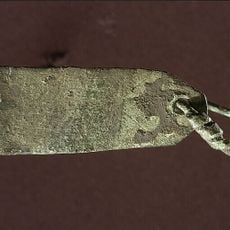
The sword found in 1927 in one of the cremation graves has a cross-shaped pommel and was made in two parts, blade and hilt joined together. Similar finds exist in Denmark, which is why it is thought to have come from there; it has no counterpart elsewhere in Sweden.
The community of curious travelers
AroundUs brings together thousands of curated places, local tips, and hidden gems, enriched daily by 93,607 contributors worldwide.