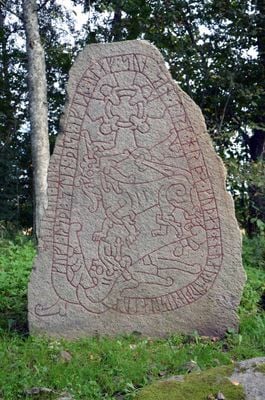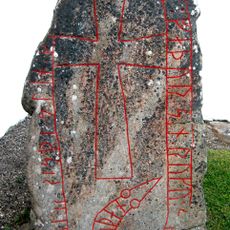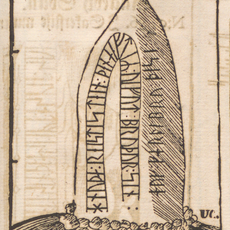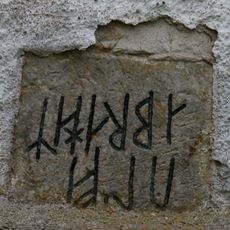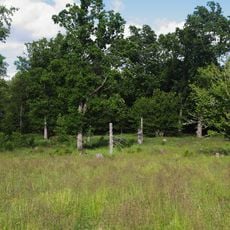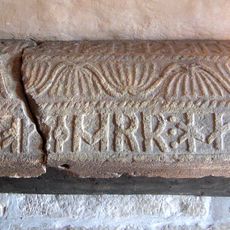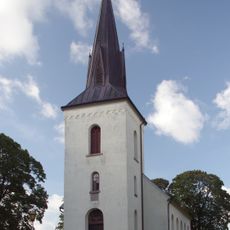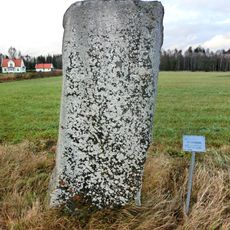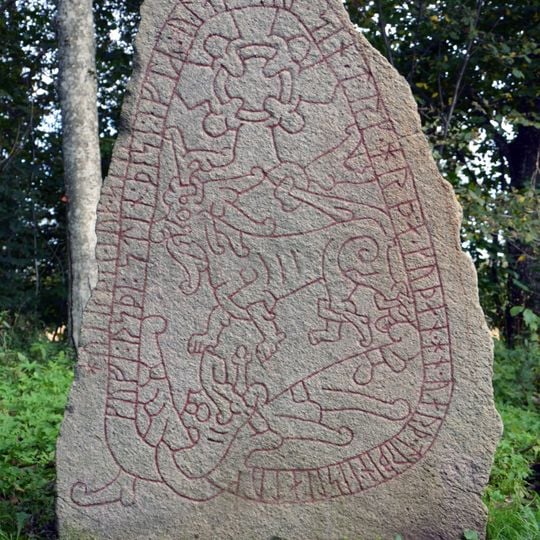
Olsbrostenen, A runestone in Norra Åsarp, Västergötland (Norra Åsarp 40:1).
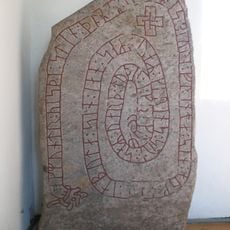
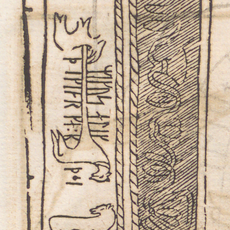
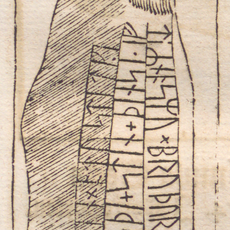
Olsbrostenen is a runestone of coarse-grained granite measuring 2.1 by 1.6 metres, standing on an unexcavated burial mound south of Åsarp. Its face is bordered by a loop of runic characters painted red, enclosing intertwined animal figures with looping limbs and a spiral detail. The carving depicts a large four-legged animal with knotted legs and a maned outline, known as the Great Beast.
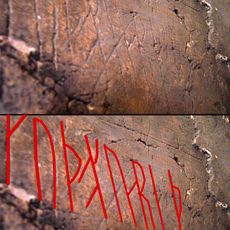
The inscription records that Gufi raised the stone for his son Ólafr, called a dræng, who was killed in Eistland (Estonia). The carver signed as Hávarðr, though the runes are damaged. The ornament, a great beast in Ringerike style, suggests a date between 1020 and 1050, though one source proposes around 970.
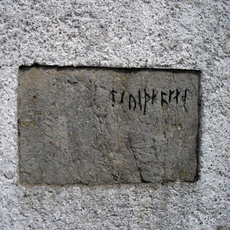
The inscription names the carver as Hávarðr, whose signature sits outside the rune band and is partly damaged; the reading Havarðr is the most likely but is otherwise unknown in runic inscriptions. The stone is also the only known runestone that names the whole country of Estonia, Æistlandum, where Ólafr was killed.
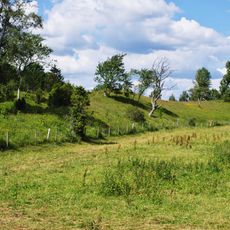
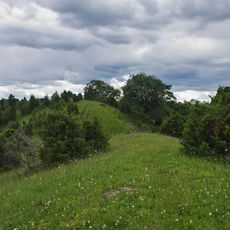
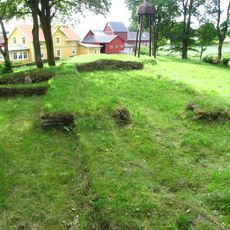
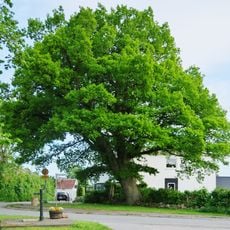
The stone stands on the eastern side of the entrance to Frugården in Alvared, south of Åsarp and about a kilometre southwest of Norra Åsarps kyrka, east of the Ätran. It rests on an unexcavated burial mound, so the ground around it is uneven. The nearby Olsbro, 15 metres north-northwest, gave the stone its name.
The stone stands on an unexcavated burial mound whose outward form suggests the Bronze Age or early Iron Age, so the runestone was raised on a much older grave. The carver's signature sits outside the runic band, and its partly damaged runes make the name hard to read; Hávarðr is the likeliest interpretation.
The community of curious travelers
AroundUs brings together thousands of curated places, local tips, and hidden gems, enriched daily by 94,473 contributors worldwide.