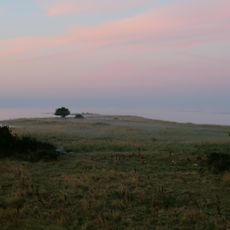
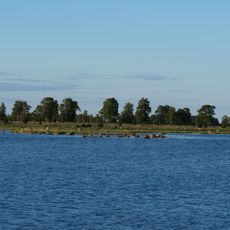
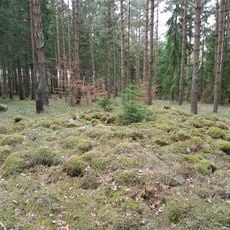
Brömsehus, Archaeological site in Blekinge, Sweden.
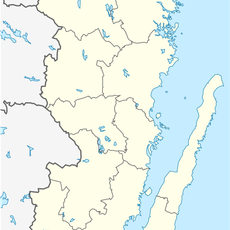
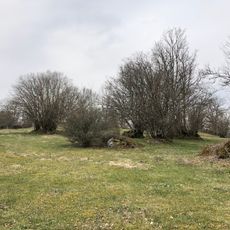
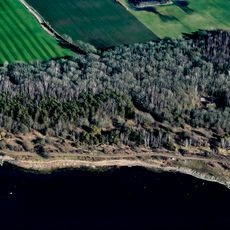
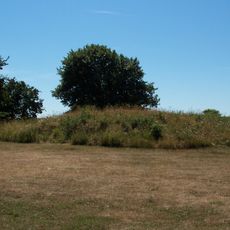
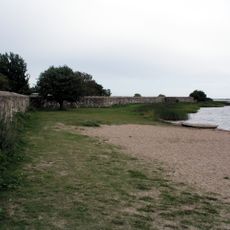
Brömsehus is a ruined hilltop fortress site in Blekinge, near the mouth of the Brömsebäck stream in Karlskrona Municipality. The site is now a mound of ruins, once surrounded by palisades and moats, with no archaeological excavations carried out. In the mid-18th century, remains of a building measuring 30 by 30 alnar (about 18 by 18 metres) were still visible.
Brömsehus was probably built by the Danish king Valdemar Atterdag between 1361 and 1365 and is first mentioned in a 1366 peace treaty with the dukes of Mecklenburg. The Swedes took and burned it in 1436 during the Engelbrekt rebellion, led by Nils Stensson (Natt och Dag). In 1505 Sten Kristiernsson (Oxenstierna) had the islet fortified as a Swedish border post, but it was likely abandoned soon after.
The name comes from Brömsebäck, the border stream that once separated Denmark from Sweden. No archaeological excavation has ever been carried out on the mound, so nothing has been dug up or put on display. What visitors see today is a ruin mound in Kristianopel parish, Karlskrona Municipality, Blekinge.
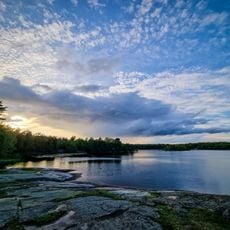
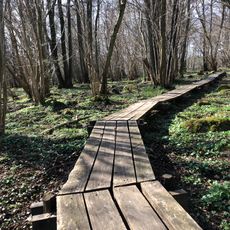
Brömsehus is reached on foot from Kristianopel; the site is a ruin mound in open ground with no excavations, panels or facilities. The ground is uneven and overgrown, so wear sturdy shoes and check the weather before setting out.
No archaeological excavation has ever been carried out on the site, which today is only a ruin mound. In the mid-18th century traces of a building measuring 30 by 30 alnar (roughly 18 by 18 metres) could still be seen, and in the 19th century a collapsed cellar with visible steps remained; nothing of it is visible now.
The community of curious travelers
AroundUs brings together thousands of curated places, local tips, and hidden gems, enriched daily by 93,648 contributors worldwide.