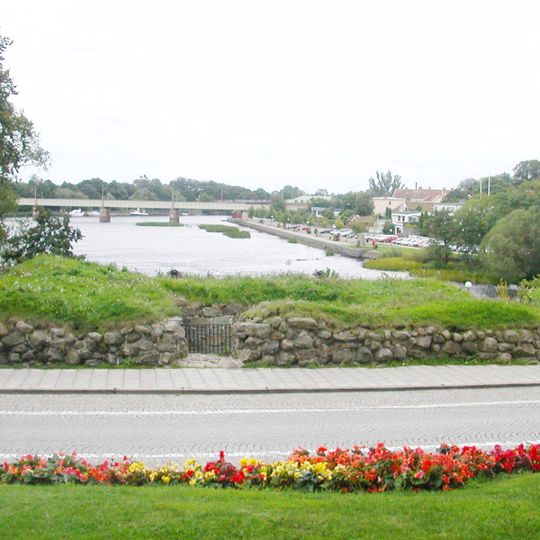
Falkenberg, Medieval castle ruins in Falkenberg, Sweden
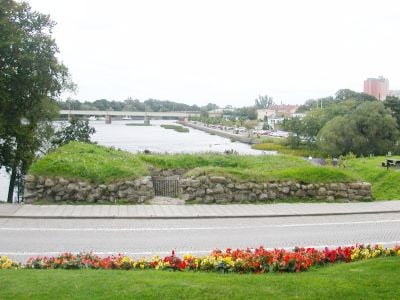
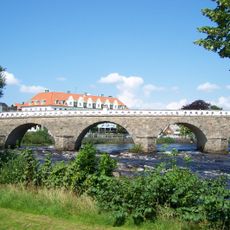
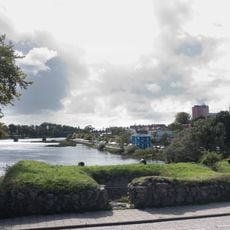
Falkenberg, also called Falkenbergshus, was a fortification on the south bank of the river Ätran, about 60 m from the southern abutment of today's Falkenberg Bridge. It consisted of a tower with an inner area of 5.5 by 5.5 m and outer dimensions of 15.5 by 15.5 m at the base; the walls were thickest at the base and above the partially intact lower section were brick walls.
Falkenberg is first mentioned in 1298 and served as a Danish royal castle controlling the Falkenberg len. Several Nordic treaties were signed there in the 14th century. Duke Erik Magnusson burned it in 1356, and it was rebuilt. In 1434, during the Engelbrekt rebellion, its commander Åke Axelsson (Tott) set it on fire and escaped by water; it was never rebuilt.
The ruins show how people lived and defended themselves in medieval Sweden along the coast. The remains tell of a time when such fortifications shaped daily life in the region.
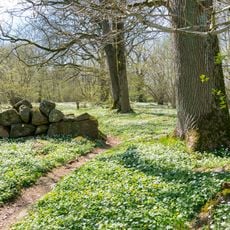
The site is walkable from central Falkenberg and has marked paths for exploring the stone structures. Informational panels on location help you understand the different areas and follow the site's story.
Excavations in 1885, led by G. Gustafson, recovered 973 objects from the fort area, including 49 arrowheads, 18 knives, 20 horseshoes and a gold finger ring. Among the bone finds was a knife handle carved with a human figure. No traces of buildings other than the tower were found, suggesting the fort was used only in times of war.
The community of curious travelers
AroundUs brings together thousands of curated places, local tips, and hidden gems, enriched daily by 93,763 contributors worldwide.