Hoverberget, Nature reserve in Berg Municipality, Sweden.
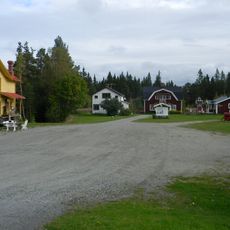
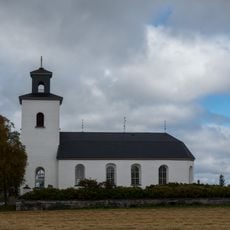
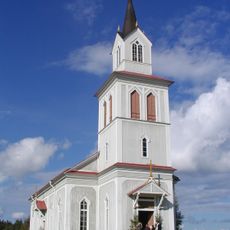
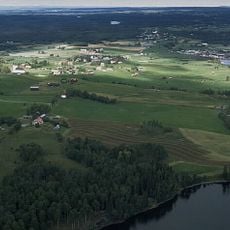
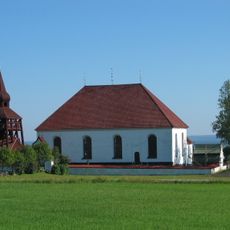
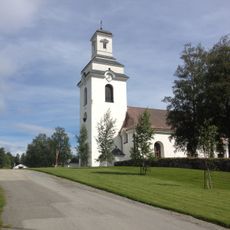
Hoverberget is a porphyry mountain on a peninsula in southern Storsjön, rising 255 m above the lake to 548 m above sea level. Its south slope holds the village of Berg and Bergs kyrka, and most of the mountain is a Natura 2000 nature reserve. A 500 m fissure called Rämnan cuts the rock, visible from the west and from länsväg 321.
The geological formations at this site date back millions of years, created through tectonic processes that shaped northern Scandinavia. These rock structures have been exposed and modified over time by natural erosion and weathering.
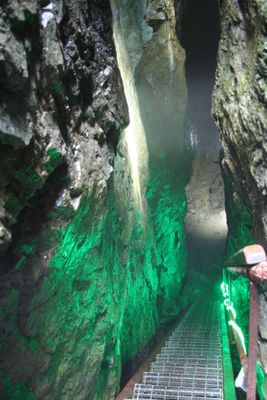
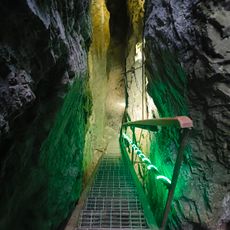
Folk tales name the giant Hoverbergsgubben (the Old Man of Hoverberg) as the cave's first resident; he is said to have left when people began tidying the cave. The cave was discovered in 1897 by Jöns Väst, a Swedish-American, and 81 of its 170 metres are open to visitors.
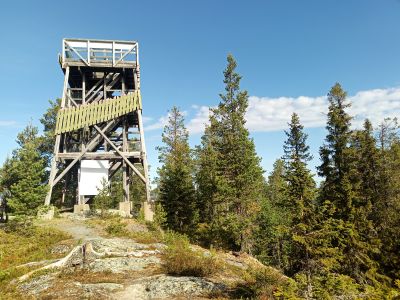
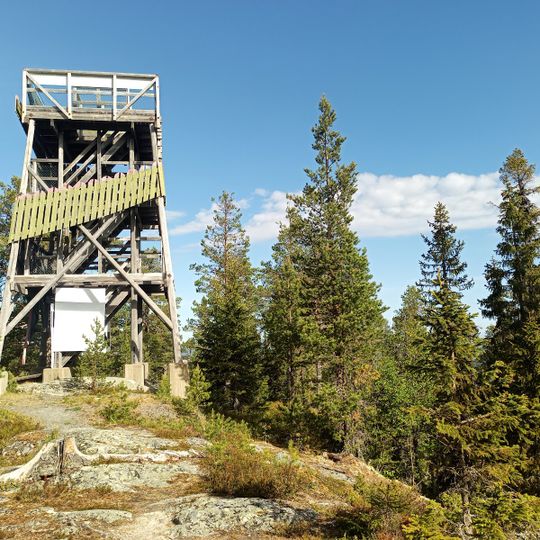
The Hoverberg Cave is 170 m deep, and 81 m of it is accessible to visitors. A café on the summit is open in summer, next to an observation tower. The Rämnan fissure, about 400 m long and 25 m deep, is visible from the west and from county road 321.
The Hoverberg Cave was discovered in 1897 by Jöns Väst, a Swedish-American; of its 170 m depth, 81 m is accessible to visitors. Less known is Rämnan, a fissure about 400 m long and 25 m deep, visible from the west and from county road 321.
The community of curious travelers
AroundUs brings together thousands of curated places, local tips, and hidden gems, enriched daily by 94,392 contributors worldwide.