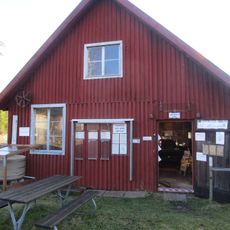
Kosta Boda, Glassworks and working museum in Kosta, Lessebo Municipality, Sweden.
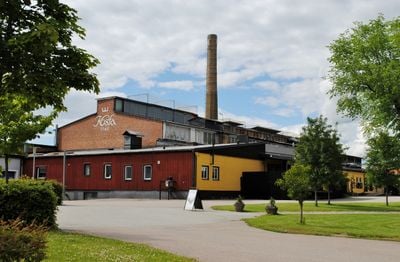
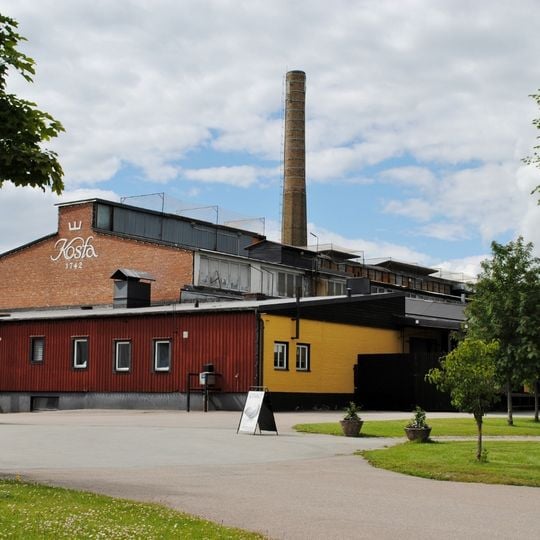
Kosta Boda is a glassworks in Kosta, Lessebo Municipality, whose red brick facade bears the raised white lettering "Kosta" above "1742" beneath a crowned emblem. Behind the brickwork an upper storey of dark grey panels with a row of windows rises, and a tall cylindrical chimney of pale brown brick stands on the roof. To the right, a lower wing has corrugated red walls with four small windows and a yellow section with two windows and a dark doorway.
Lieutenant Lars Johan Silfversparre obtained privileges in 1740 for a glassworks at Dåvedshult but never started it, passing them to governors Anders Koskull and Georg Bogislaus Staël von Holstein. Construction began in 1741, and the name Kosta combines the first syllables of their surnames. The first glassblowers came from Thuringia, Germany. A fire destroyed the factory complex in 1901, but the furnaces survived and production resumed within months.
The name Kosta combines the surnames Koskull and Staël von Holstein, and the town took its name from the works. The first glassblowers came from Thuringia in Germany and for 50 years no Swedes were hired among them. In 1751 the engraver known as "Riterskan Eliza" worked here, likely Elisabet Klenstyfwer, wife of engraver Hans Wentzel Gerner.
You can watch glassmakers at work and join guided tours explaining each step of the production process. There is a shop on site where you can purchase pieces made directly in the workshop.
The facility produces trophies and awards for major international competitions, handcrafted with the same care as any other piece made here. These special commissions showcase the high standards of craftsmanship the workplace is known for.
The community of curious travelers
AroundUs brings together thousands of curated places, local tips, and hidden gems, enriched daily by 93,629 contributors worldwide.