Tureholm Castle, 18th-century castle in Trosa Municipality, Sweden
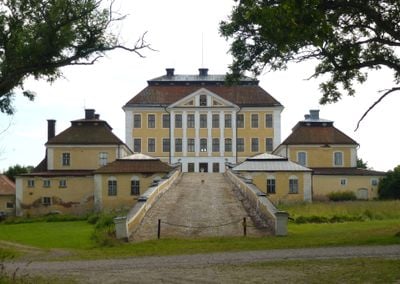
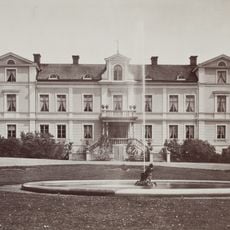
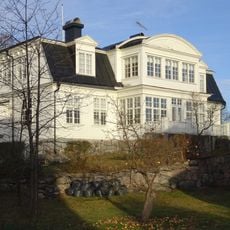
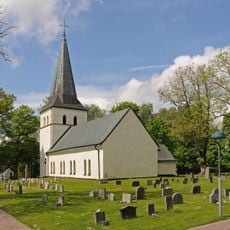
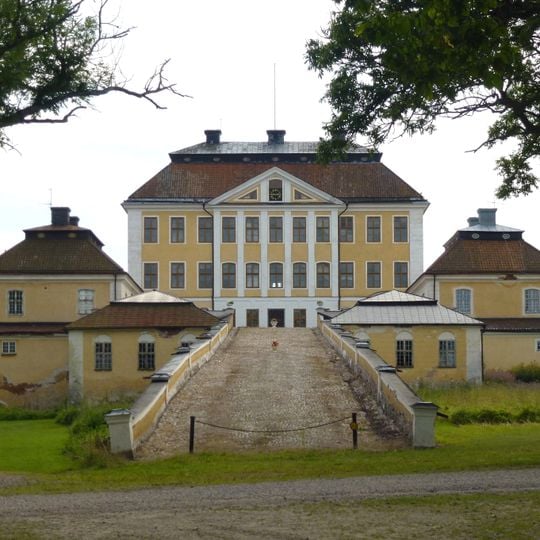
Tureholm Castle is a three-storey stone house with pale yellow plaster and a dark tiled säteritak roof, its central block rising above two end wings linked by lower sections. A triangular pediment crowns the upper facade, and a wide gravel ramp ascends to the entrance between two low pavilions with grey metal roofs. A high terrace with two wings surrounds the building, and a French-style terraced garden with hedges lies on the south side.
The estate was first recorded as Gäddeholm, held by Nils Gädda in the 1300s. In the 1640s Sten Nilsson Bielke commissioned a castle designed by Erik Dahlbergh; it burned during the Russian raids of 1719. Thure Gabriel Bielke began rebuilding in 1728 to Carl Hårleman's designs, reusing some load-bearing walls, and the work continued into the 1740s. The castle was renamed Thureholm in 1761 after its builder.
The castle maintains a collection of family portraits and a library, representing the heritage of Swedish nobility through multiple generations.
The castle remains a private residence of the Bonde family since the 1930s and is accessible only through arranged tours. Advance planning is needed to gain access to the property.
The castle's fixed interior decoration and ornamentation survive almost entirely intact, which the Swedish sources call its most unusual feature. The armoury room, panelled in oak, was bought whole by the Livrustkammaren in 1915, adding nearly 500 objects to the 1877 transfer.
The community of curious travelers
AroundUs brings together thousands of curated places, local tips, and hidden gems, enriched daily by 94,240 contributors worldwide.