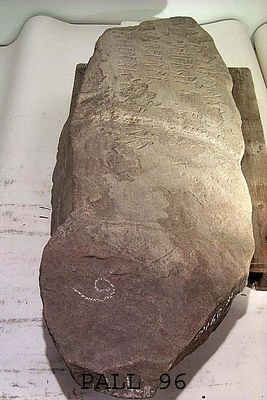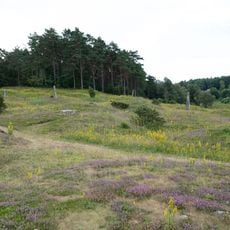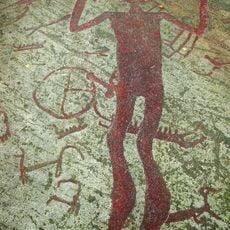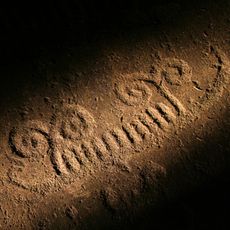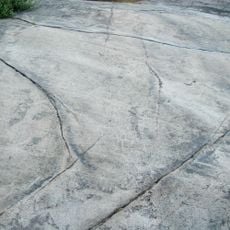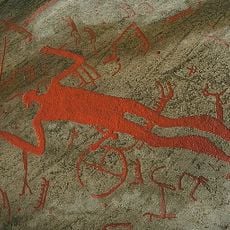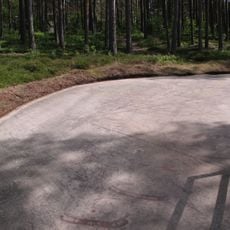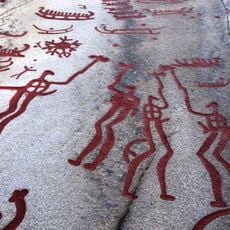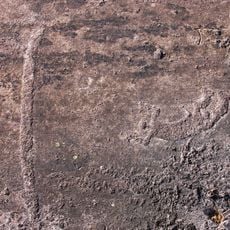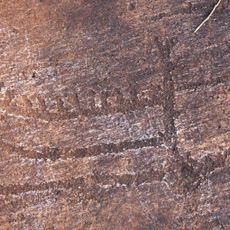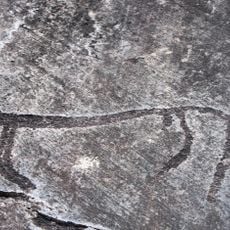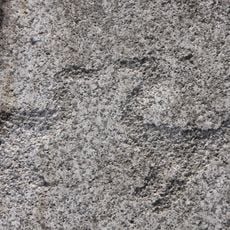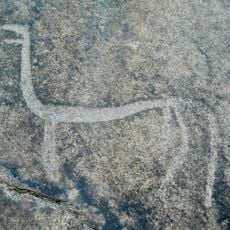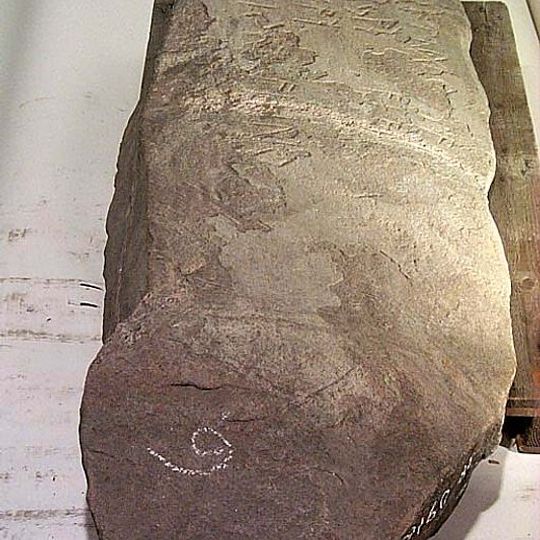
Rö runestone, Norse runestone at Swedish History Museum, Sweden.
The Rö runestone stands about 2 meters tall and 1.2 meters wide with four parallel rows of runic inscriptions carved across its granite surface. The entire visible field displays Proto-Norse text using the elder futhark alphabet system.
The stone dates to the 5th century and was found in 1919 at Rö farm on the island of Otterö. This discovery became one of the most important examples of Proto-Norse writing from that early period.
The stone's name references Stainawarijaz, meaning Stone Guard, and connects a Suebian warrior to enduring marks in early Germanic culture. The inscription reflects how honor and remembrance held deep meaning in these northern societies.
The stone is housed at the Swedish History Museum in Stockholm alongside other Viking Age artifacts. Visitors can examine it within the broader context of other Nordic monuments and ancient objects.
The inscription contains the word fahido, meaning painted, which suggests the stone was decorated by painting rather than carving. This unusual technique reveals different creation methods than long assumed.
The community of curious travelers
AroundUs brings together thousands of curated places, local tips, and hidden gems, enriched daily by 91,662 contributors worldwide.