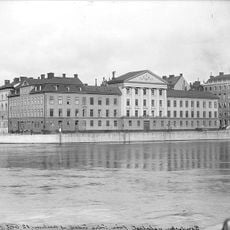
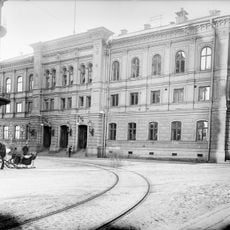
Vasabron, Steel bridge in central Stockholm, Sweden
Vasabron is a steel bridge in central Stockholm that crosses the Norrström with seven graceful arches, connecting the modern district of Norrmalm to the medieval center of Gamla Stan. The structure accommodates both vehicular and pedestrian traffic along its span above the water.
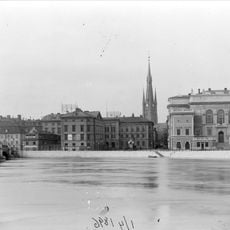
A first suspension footbridge was begun by engineer Samuel Owen but abandoned when he went bankrupt in 1843. A competition in 1868 led to construction from 1872 to 1878, with cast steel used for the first time and underwater cast concrete foundations. Electric trams forced reinforcement in 1906, and rust closed the bridge from 1977 to 1979.
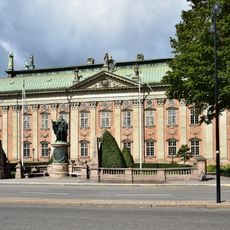
The name Vasabron, "Vasa Bridge," refers to King Gustav Vasa (1496–1560), likely because of the nearby statue of the king in front of the House of Knights. The bridge's cast-iron railings and lamp posts, designed in Art Nouveau by architect Agi Lindegren in 1911, replaced the original gas lamps.
Vasabron runs from Fredsgatan and Tegelbacken in Norrmalm to Riddarhuskajen in Gamla Stan, and from its middle Strömsborgsbron leads to the islet Strömsborg. Vehicles over 12 tonnes are barred while the 1878 bridge awaits reinforcement and replacement. Riddarhusgränd, the alley continuing south, is under 7 metres wide, so one roadway detours around the Bonde Palace.
The bridge features end grain wood blocks placed on concrete foundations, creating a specialized roadway surface designed for transportation needs of that era. This construction method was chosen to provide durability and traction for carriages and vehicles crossing above the water.
The community of curious travelers
AroundUs brings together thousands of curated places, local tips, and hidden gems, enriched daily by 93,401 contributors worldwide.