Bälteberga, Manor house in Helsingborg Municipality, Sweden.
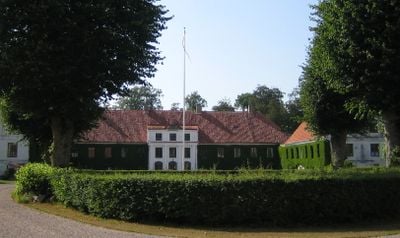
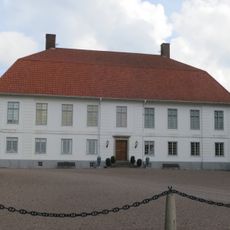
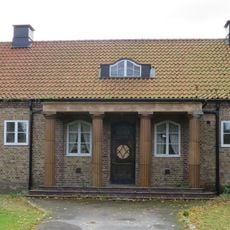
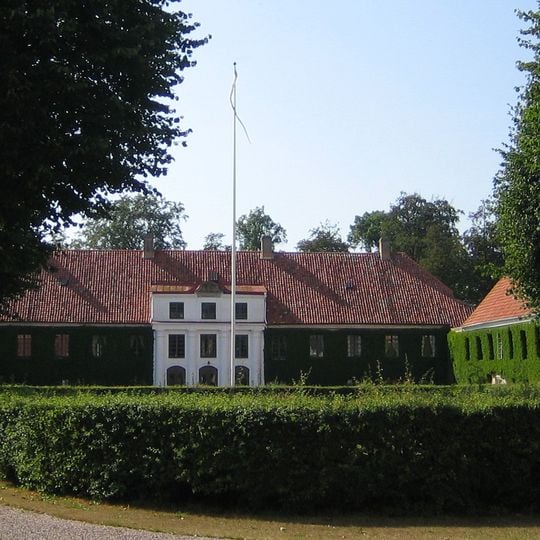
Bälteberga is a manor house in Helsingborg Municipality whose white-plastered main building and two wings, all with red tiled roofs, face an inner courtyard. The main facade has a central entrance topped by an attic supported by four smooth half-columns, and the walls are covered with Virginia creeper. A long avenue leads to the entrance, flanked by two yellow-brick outbuildings.
Bälteberga is first documented in 1387, when Johan Niklisen is named as owner. In the 15th century it passed to the Danish noble family Urne, and Claus Urne established a noted medicinal herb garden with the Malmö physician Henrik Smith. In 1739 Wilhelm Bennet built the present main building and wings to drawings by Georg Mochelton; Carl von Linné visited on 8 July 1749. The Kinch family has owned the estate since 1868.
The name Bälteberga is linked to the legend of Ottar Belt, whose surname appears in both the estate and the parish of Ottarp. In the 16th century, Claus Urne and the Malmö physician Henrik Smith established one of the Nordic region's foremost botanical gardens for medicinal herbs here. Carl von Linné visited on 8 July 1749 during his Scanian journey and recorded the estate's character.
Access to the corps de logi is from the southeast, along a long, mature avenue that leads up to the entrance. Two yellow-brick outbuildings with brownius-style gable facades flank that entrance, and behind them a courtyard opens up with a lawn bordered by bushes and scattered trees. The garden continues as an avenue down toward the Bälteberga ravine, where Tjutebäcken cuts through the Kågeröd layers.
The estate's name is linked to the legend of Ottar Belt, whose surname survives both in the manor's name and in that of Ottarp parish. The owner held patronage rights over the Ottarp parish. Since 1868 Bälteberga has belonged to the Kinch family.
The community of curious travelers
AroundUs brings together thousands of curated places, local tips, and hidden gems, enriched daily by 94,004 contributors worldwide.