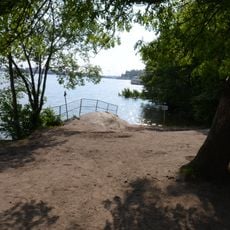
Heleneborg, Historic estate in Södermalm, Stockholm, Sweden.
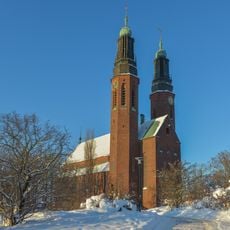
Heleneborg is a former malmgård at Söder Mälarstrand 111 in northwestern Södermalm, Stockholm. The surviving main building, renovated by captain Johan Adolf Berg in 1874, stands next to the street close to Västerbron, opposite Långholmen island. The rest of the grounds were divided into lots for apartment houses after 1906.
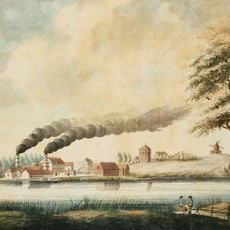
Jonas Österling bought the plot in 1669 and planned a tobacco spinning works; after his bankruptcy and death in 1691 the buildings burned in 1701. Olof Forsberg ran a white clay pipe works from 1739 to 1759, and Adolph Christiernin, who named the estate after his wife Helena Katarina Malmin, continued pipe making until 1766. In 1864 a nitroglycerin explosion killed six people, including Alfred Nobel's brother Emil, in Immanuel Nobel's rented premises.
Adolph Christiernin named the estate Heleneborg after his wife Helena Katarina Malmin; the name is first recorded in 1761. The clay pipe works on the site were started in 1739 by Olof Forsberg and his partner Olof Aspegren, not by Christiernin, and produced up to a million white Dutch clay pipes a year until 1766.
The main building stands at Söder Mälarstrand 111, close to the Västerbron bridge, opposite Långholmen island. The grounds were divided into lots in 1906, so only the main building remains; approach from the waterfront street to see it.
The estate was closely linked to the Nobel family's testing of explosive materials before accidents prompted them to relocate their research elsewhere. This scientific activity, conducted before they became internationally known, left a deep imprint on the location's history.
The community of curious travelers
AroundUs brings together thousands of curated places, local tips, and hidden gems, enriched daily by 93,403 contributors worldwide.