Huseby bruk, Former ironworks and manor estate in Skatelöv parish, Sweden
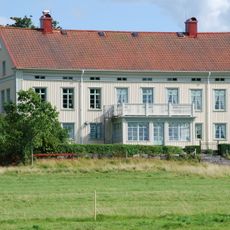
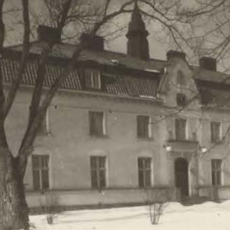
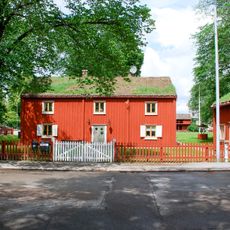
Huseby bruk is a former ironworks in Skatelövs parish, Alvesta Municipality, between lakes Salen and Åsnen. The main building, begun in the 1830s and finished in 1844 for the Hamilton brothers, is a two-storey manor. A long red wooden building with vertical planks and a small "HUSEBY BRUK" sign stands before a square red tower with a dark pyramidal roof.
The complex was founded in 1629 and produced pig iron from swamp deposits for centuries. Operations later expanded when a foundry began manufacturing cannons and cast-iron stoves until the 1950s.
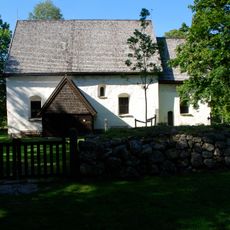
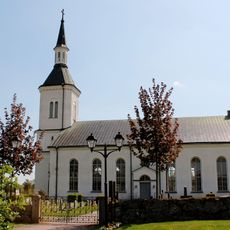
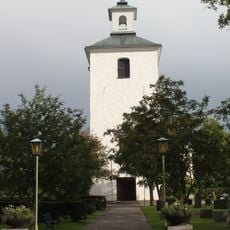
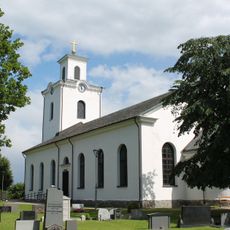
The name Hosaby, recorded in 1419, refers to the village at the mouth of the Helige å where it meets Lake Åsnen. The estate church and the preserved buildings of the ironworks community show how the works shaped the parish. Since 1994 the estate has been managed by Statens Fastighetsverk as a working-life museum.
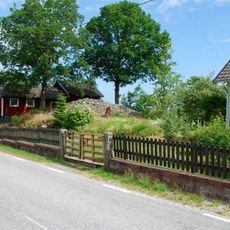
Huseby bruk lies by the Helige å between lakes Salen and Åsnen, in Skatelövs socken, Alvesta kommun. The estate is large, so allow time to walk between the ironworks area, the 1844 main building and the surrounding farmland. A gravel path leads toward the low red wooden building with the "HUSEBY BRUK" sign and the red tower behind it.
Carl Carlsson Gyllenhielm, who founded the ironworks, never visited Huseby himself, though he monitored its operation closely. In 1642 he leased the works to Arnold de Rees from Haarlem, who the following year received sole rights to run ironworks in Småland. De Rees shipped cast iron from Huseby to Copenhagen, Stralsund, Lübeck, Hamburg, Haarlem and Amsterdam on the owner's own vessels.
The community of curious travelers
AroundUs brings together thousands of curated places, local tips, and hidden gems, enriched daily by 94,448 contributors worldwide.