Lenaborg, Medieval palace ruin in Kungslena, Västergötland, Sweden
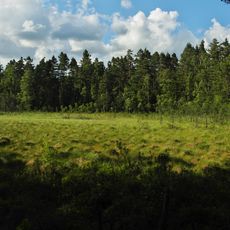
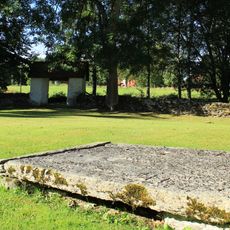
Lenaborg, also called Lenahus, is the ruin of a small medieval palace in Kungslena village, on a slope above Lena church in Västergötland. Its main building measured 30 by 15 metres, and the basement level was divided into six rooms. A nearby mound may hide the remains of a tower.
Lenaborg was likely built in the mid-1200s as a small medieval palace, first known owner Birger Jarl met his son-in-law King Håkon the Young of Norway there in 1257. In 1287 Bishop Bengt of Linköping tried to bequeath it to the cathedral, sparking a dispute; it passed to Marshal Tyrgils Knutsson, who was arrested there in December 1305. The estate went to Linköping Cathedral in 1318 and was reclaimed by the crown in 1527, after which it was called Kungs-Lena. The palace was demolished in the early 1400s.
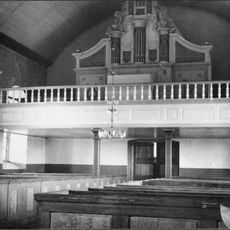
The name Kungs-Lena, used for the estate after 1527, marks the crown's takeover when Gustav Vasa reclaimed it during the Reformation. In the second half of the 1500s the property became a free lordship and later passed to the Stenbock family, who no longer lived in the 13th-century building. The village church of Lena stands just below the slope.
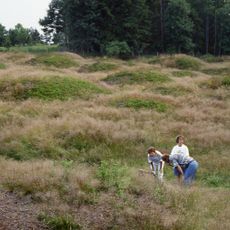
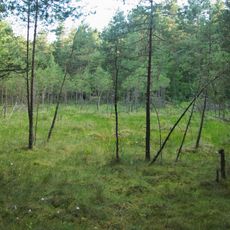
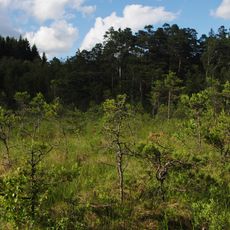
The ruins lie on a slope just above Lena church in Kungslena village, in Tidaholm Municipality. The main building's cellar level was divided into six rooms, and a nearby ruin mound may hide a tower. Small archaeological investigations were led by Ragnar Sigsjö. The earthworks by the streams relate to damming water rather than to defences.
The palace's main building measured 30 by 15 metres, and its basement level was divided into six rooms. A nearby mound of ruins may hide the remains of a tower. Small archaeological investigations at the site were led by Ragnar Sigsjö.
The community of curious travelers
AroundUs brings together thousands of curated places, local tips, and hidden gems, enriched daily by 94,027 contributors worldwide.