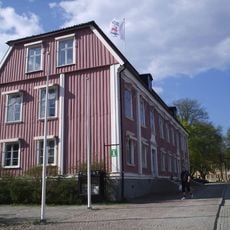
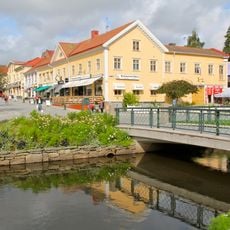
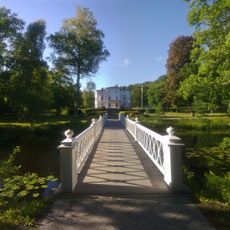
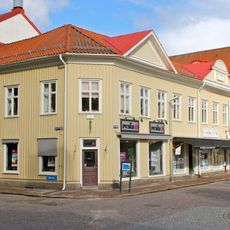
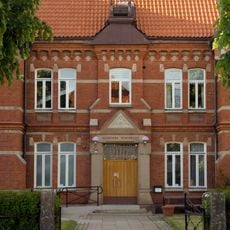
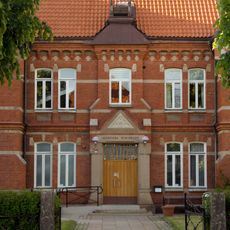
Nolhaga, Manor house in Alingsås, Sweden.
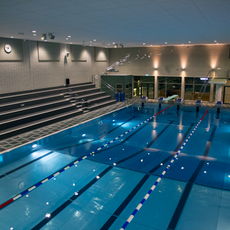
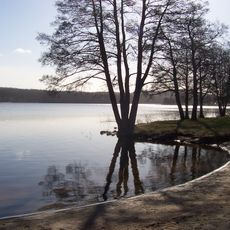
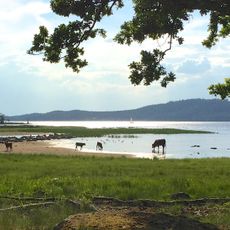
Nolhaga is a park and recreation area in Alingsås, bounded by Nolhaga berg, the Säveån river and lake Mjörn. At its centre stands Nolhaga slott, a patrician villa in Italian Neo-Renaissance style designed by Adrian C. Peterson and built in 1879–1880 for Claes Adelsköld. The area also contains a zoo, allotment gardens, sports halls and the wetland area Kongo.
Jonas Alströmer bought Nolhaga in 1724 and expanded it into a model estate, growing plants from around the world. After his sons' deaths the property decayed. In 1877 Claes Adelsköld acquired it and had architect Adrian C. Peterson design a new main building in Italian Neo-Renaissance style, built 1879–1880. Alingsås town bought the castle and park in 1921, making them public.
The name Nolhaga comes from the historic estate that Jonas Alströmer developed from 1724. Today the park is a public recreation area, acquired by Alingsås town in 1921, with a zoo added in the 1950s. The castle, often called Nolhaga slott, now houses a restaurant and conference floor.
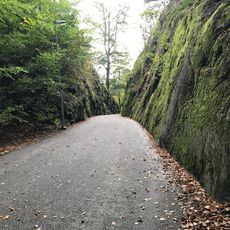
The park is public and free to enter. Paths connect the castle, the animal park, Nolhaga berg and the Kongo wetland; the terrain is mostly flat but the hill requires a climb. The area is used for walking, disc golf and sport, so expect activity around the sports halls.
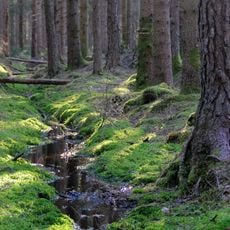
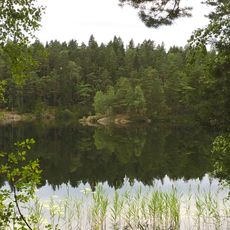
The swampy area called Kongo, in the southern part of the grounds, is named after the Congo basin and gives the park a wet, dense woodland unlike the drained lawns Adelsköld laid out. It is a low-lying wetland rather than a tropical forest, and it now forms part of the Nolhaga nature reserves.
The community of curious travelers
AroundUs brings together thousands of curated places, local tips, and hidden gems, enriched daily by 94,561 contributors worldwide.