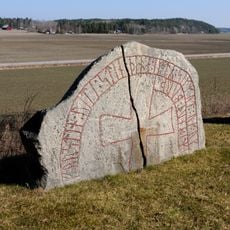
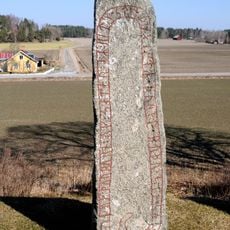
Rönö kungsgård, Royal estate in Norrköping Municipality, Sweden
Rönö kungsgård is a former royal estate on the Vikbolandet peninsula in Norrköping Municipality, Östergötland. Its main building is a white-rendered timber house from the 1730s. A grey-panelled wooden wing was built in the early 19th century on the ruins of the older castle, and the estate also has red-painted outbuildings such as a brewhouse, smithy, henhouse and barn.
Rönö belonged to the Bishop of Linköping until Queen Margareta bought it from Karl Ulfsson till Tofta and his son Knut Karlsson in 1389 and gave it to the bishop. A stone house built soon after was taken by Bishop Knut's troops in 1434 and demolished in 1497 on Sten Sture the Elder's orders. After the Reformation it passed to the crown, recorded in 1558 as a farm under Stegeborg Castle; Johan III built a new castle there, which Russian troops burned in 1719.
The estate's name lives on in Rönö socken and in the 1641–1642 Rönö kyrka beside the castle, whose bell tower was added around 1680. The churchyard setting also holds a former school building from 1884 and a former old people's home, so church, estate and village institutions stand within sight of one another.
The site is located outside Norrköping and is best reached by car since it sits in a rural area. Check ahead to see which areas are accessible to visitors, as the property operates as an active school campus.
The 1706 engraving by Jan van den Aveelen in Erik Dahlbergh's Suecia antiqua et hodierna shows Rönö Castle with the coats of arms of Johan Casimir and his wife Princess Katarina. The castle itself was burned by Russian troops during the Russian ravages of 1719, so the picture preserves a building that no longer stands.
The community of curious travelers
AroundUs brings together thousands of curated places, local tips, and hidden gems, enriched daily by 94,353 contributors worldwide.