Rodga, Manor house in Norrköping Municipality, Sweden.
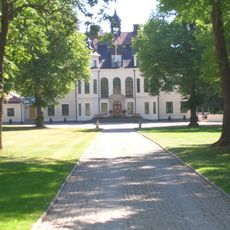
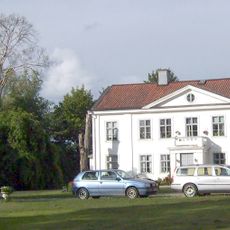
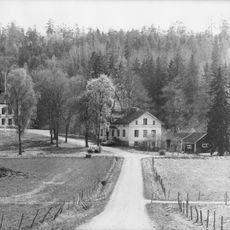
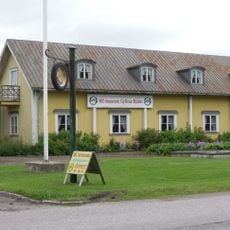
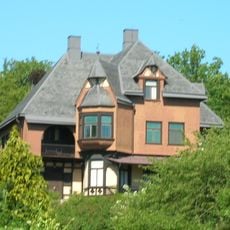
Rodga is a manor house in Norrköping Municipality featuring stone walls, structured gardens, and several connected buildings that form a unified architectural ensemble. The complex displays traditional Swedish building practices with additions made across different periods.
Rodga is recorded in the Middle Ages and appears in 1543 as a stubbe- och rödjehemman. Its heyday began in the 1670s when the Dutch-born Norrköping resident Hans Pieter Hellwegh bought it and, with privileges granted in 1677, set up sailcloth and buldan weaving under Karl XI; 33 looms employed 500 households. In 1760 the merchant Jacob Graver took over and added an upper storey to the manor. Sailcloth production declined and closed in 1852, after which Rodga was tied to axe production at Hults bruk.
The name Agdor, Rodga spelled backwards, comes from Aurora Ljungstedt's 1861 story "En gubbes minnen", set in a desolate manor of that name; she was the great-granddaughter of Jacob Graver, who bought Rodga in 1760. Maria Magdalena Eurenia, Graver's wife, entered the estate's legends. Axes are still made under the AGDOR name, linked to Hults bruk.
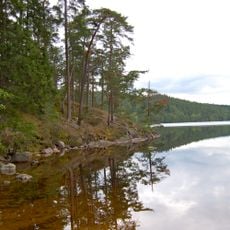
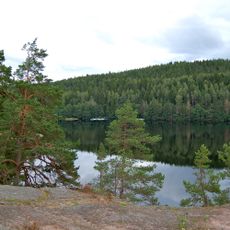
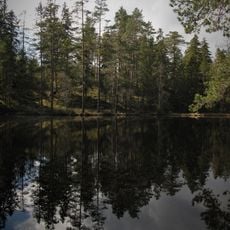
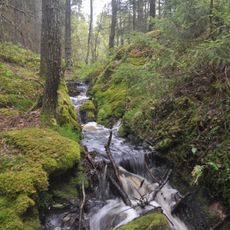
Rodga lies between Norrsjön and Sörsjön in the Östergötland mining district, reached by road from Norrköping. The manor is a listed building complex, so the buildings and grounds are best viewed from the outside; the AGDOR axe production linked to Hults bruk is not a visitor attraction at the estate.
The name Agdor, Rodga spelled backwards, is the desolate manor at the centre of Aurora Ljungstedt's 1861 story "En gubbes minnen". Ljungstedt (1821–1908) was a great-grandchild of Jacob Graver, who took over Rodga in 1760 and added an upper storey to the manor. Axes are still made under the AGDOR name, linked to Hults bruk.
The community of curious travelers
AroundUs brings together thousands of curated places, local tips, and hidden gems, enriched daily by 94,357 contributors worldwide.