Silvermuseet, Working life museum in Arjeplog, Sweden.
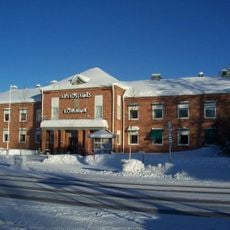
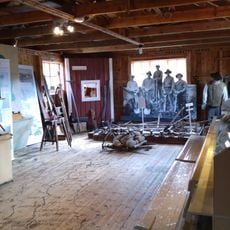
Silvermuseet is a museum in central Arjeplog, inaugurated on 23 October 1965. It occupies a former nomad school built in 1854, one of the town's oldest preserved buildings, and consists of three floors that have undergone several renovations and extensions. Its exhibitions present the region's history from prehistoric times to the present, including the lives of the Sami and settlers, and one room displays one of the world's largest collections of Sami silver objects.
Einar Wallquist, provincial doctor in Arjeplog for forty years, began collecting objects as the settler and Sami cultures were disappearing. In 1965 he donated his collection to the municipality and served as museum director until his death in 1985. The museum opened on 23 October 1965 in a former nomad school built in 1854, one of the town's oldest preserved buildings.
The museum's name refers only partly to its silver collection; it honours the Nasafjäll silver works, active in the area from 1635 to 1659 and again from 1770 to 1810. That history also led locals to call Route 95 through Arjeplog the Silver Road, and some local firms carry "silver" in their names.
Silvermuseet occupies three floors of a former nomad school built in 1854, one of Arjeplog's oldest preserved buildings, so allow time to move between levels. The building has been rebuilt and extended several times; the museum is run by a municipal foundation. It stands in central Arjeplog, and National Road 95 through town is known as Silvervägen.
The museum building is a former nomad school erected in 1854, one of the oldest preserved buildings in central Arjeplog. Since April 2009 the Institute for Arctic Landscape Research (INSARC) has operated within the museum, and its work led to the discovery near Lake Dumpokjauratj of a settlement dated to about 7800 BC.
The community of curious travelers
AroundUs brings together thousands of curated places, local tips, and hidden gems, enriched daily by 93,663 contributors worldwide.