Uppsa kulle, Iron Age burial mound in Nyköping Municipality, Sweden
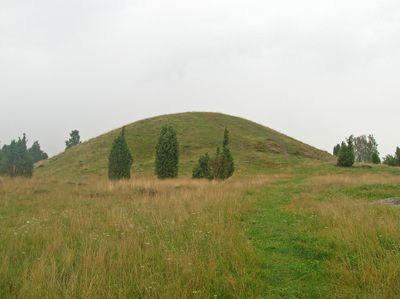
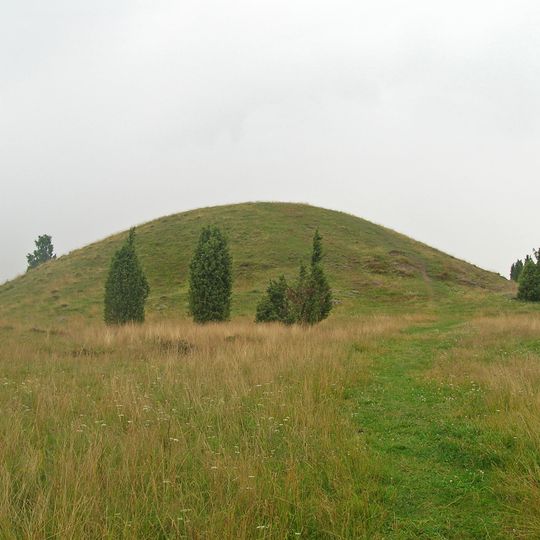
Uppsa kulle is Södermanland's largest royal mound, measuring 55 metres in diameter and nine metres high, built from about 9,000 cubic metres of earth, gravel and stone. It forms the main feature of a 150-metre-long burial field that also contains two smaller mounds and three round stone settings. A 6.5-metre-wide, 1.5-metre-deep hollow at the top is thought to mark the collapse of a burial chamber.
Uppsa kulle has never been archaeologically investigated, so its date is uncertain; it may belong to the late Swedish Iron Age or the Vendel period. According to tradition it is the grave of King Ingjald Illråde, who is said to have taken his life at Runnviken, though the Ingjaldshögen mound is also linked to him. The crater on top is thought to result from the collapse of the burial chamber.
Local tradition links the mound to Östen Adilsson, said to have fallen around 550 at Bråviken and been buried at "Lofundi", possibly Lövsund. Other legends name the saga king Ingjald Illråde, who supposedly took his life at Runnviken. Both traditions are uncertain, and the mound has never been excavated to confirm them.
The mound and its grave field lie in Runtuna socken, reachable from the Svärtaån waterway that once linked the area to the sea. The main mound rises nine metres over a field about 150 metres long and 25 to 50 metres wide. Expect uneven, turf-covered ground with hollows on the slopes and a 6.5-metre-wide, 1.5-metre-deep pit at the top.
The crater-like hollow at the top, about 6.5 metres wide and 1.5 metres deep, is thought to mark where the burial chamber collapsed. Older writings, including a text from 1683, record that a standing stone slab once stood on the summit.
The community of curious travelers
AroundUs brings together thousands of curated places, local tips, and hidden gems, enriched daily by 95,147 contributors worldwide.