Museum of Danube Komarno, Museum in Komárno, Slovakia
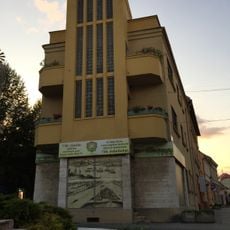
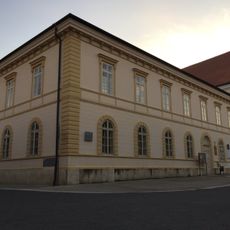
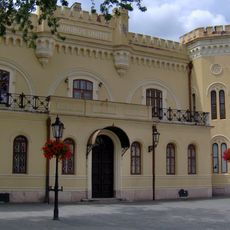
The Museum of Danube Komárno is housed in the Cultural Palace on Nádor Street, a building designed by Budapest professor Dezső Hültl and inaugurated in 1913. Its permanent exhibition traces the Komárno region from prehistory to the mid-1800s, with Roman, Celtic, late Avar and Turkish artefacts. A separate exhibition shows works by painter Károly Harmos, who taught drawing and organised the region's artistic life between the world wars.
The institution grew from a historical and archaeological society founded in 1886 that began collecting objects from the region. This early collecting work became the foundation for what the museum offers today.
The museum holds an exhibition of works by Károly Harmos, a painter, drawing teacher and organiser of the region's artistic life between the two world wars. A memorial plaque to him was placed on the main building's wall in 2000. The great hall also holds the 40,000-volume library of the Jókai Association and hosts concerts.
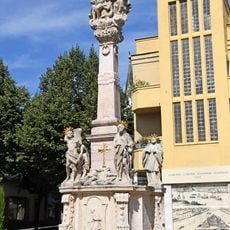
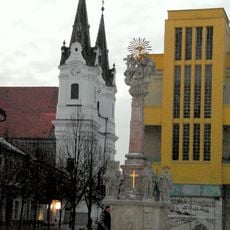
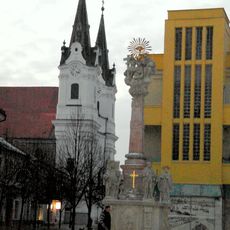
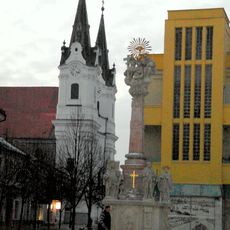
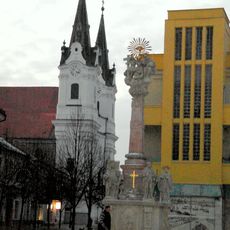
The museum's main building is the Cultural Palace on Nádor Street, opposite the Saint Andrew church; the permanent exhibitions opened there in 1914. The building's renovation began in 2023, so check which displays are accessible before setting out. Concerts are still held in the great hall.
The museum's most valuable painting is Árpád Feszty's The Battle of Bánhida, painted in 1896 for Komárom County and originally hung in the county hall's great hall. The building also holds the 40,000-volume library of the Jókai Association. A plaque for composer Béla Bartók marks his 1924 concert here.
The community of curious travelers
AroundUs brings together thousands of curated places, local tips, and hidden gems, enriched daily by 94,714 contributors worldwide.