Harmanecká Cave, Cave entrance in District of Banská Bystrica, Slovakia
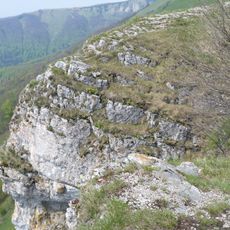
Harmanecká Cave is a stalactite cave in dark-grey Gutenstein limestone of Middle Triassic age, with 2,763 m of passages known and a 1,020 m circuit open to visitors. It lies on the northern slope of Kotolnica at 828 m, about 260 m above the Harmanec stream. Its chambers hold white pagoda-shaped stalagmites, the Stone Vase, and pinkish draperies in the Tall Gothic Dome.
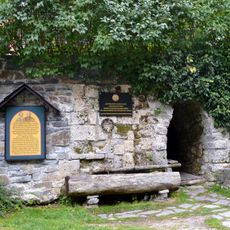
Local people had long used the entrance chamber, called Izbica, as shelter. On 22 June 1932, 18-year-old Michal Bacúrik noticed a strong draft and bats flying through a narrow fissure; after two weeks of digging he entered the first passages. Speleologists found further chambers in 1938 and 1942, and the cave opened to the public in 1950.
Locals called the entrance hall Izbica and sheltered there in bad weather long before the rest of the cave was known. The cave's symbol, a Stone Vase, appears in the Harmanecká jaskyňa emblem, and the Dome of Pagodas is named for its 12–15 m stalagmites shaped like pagodas.
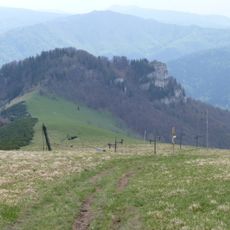
From the parking area, a winding path climbs 1.4 kilometers to the cave entrance, gaining about 260 meters in elevation. The walk requires steady effort and proper footwear, as the ground can be uneven in places.
Ten bat species have been recorded here, not eleven. The most numerous are the Greater and Lesser Mouse-Eared Bats, which gather in groups of up to 1,200 individuals. They hibernate in winter, living off fat stored under their skin, and invertebrates also inhabit the cave.
The community of curious travelers
AroundUs brings together thousands of curated places, local tips, and hidden gems, enriched daily by 94,195 contributors worldwide.