Havránok, Archaeological open-air museum in Liptov, Slovakia
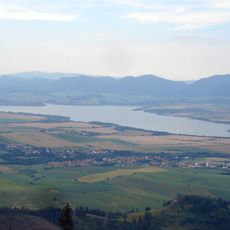
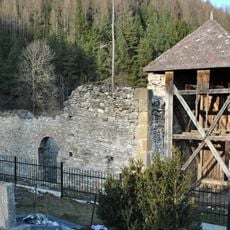
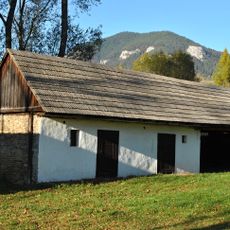
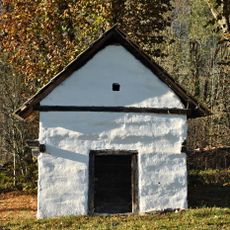
Havránok is an open-air museum on a hill above the Liptovská Mara reservoir, about 2 km from Bobrovník. Its reconstructed buildings include a fortified gateway with stone walls (120–50 BCE), a farmstead and pottery kiln (300–100 BCE), a wooden shrine with a tall central column, and a partially rebuilt medieval wooden castle.
Havránok was a religious, economic and political centre of the Púchov culture, where the Celtic Cotini mingled with the older Lusatian population. Its oppidum was destroyed around the start of the Common Era, possibly by the Quadi or Dacians. A wooden castle stood on the site from the 11th to the 15th century, and the hill fort and castle were excavated in the 1960s during construction of the Liptovská Mara dam.
Havránok's name comes from the Celtic shrine built in the 1st century BCE around an exceptionally tall wooden column, likely a totem or statue. Excavators found a ritual pit beside it holding bones of at least seven sacrificed people, beaten to death and quartered, with agricultural tools nearby suggesting offerings for a good harvest. Smaller wooden columns stood with burnt offerings of jewellery, crops and animals buried alongside.
The site lies on the eastern slope of Úložisko hill above the Liptovská Mara dam, in the cadastre of Liptovská Sielnica. It is reached on foot along a red-marked trail from Bobrovník (bus, about 35 minutes) or from Vlachy (bus and train, about 45 minutes).
The Celts of Havránok minted their own copper coins, but these could not match the silver Biatecs struck by the Boii at Bratislava. A ritual pit beside the central wooden column held bones of at least seven sacrificed people, beaten to death and quartered, with agricultural tools nearby suggesting the rite was meant to secure a good harvest.
The community of curious travelers
AroundUs brings together thousands of curated places, local tips, and hidden gems, enriched daily by 95,322 contributors worldwide.