Odesa Astronomical Observatory, Research astronomical observatory at Odesa University, Ukraine.
Odesa Astronomical Observatory is a research facility at Odesa University housed in a round tower designed by architect Oleksandr Bernardatstsi. Inside, it holds roughly 100,000 photographic plates from decades of night sky observations.
The observatory was founded in 1871 as part of Imperial Novorossiya University, initially studying Mercury transits. This early work also served the needs of ships and maritime navigation.
In the late 1800s, staff members controlled when the city's gas street lamps turned on and kept the main clock running on time. This work tied the observatory directly to how Odesa functioned each day.
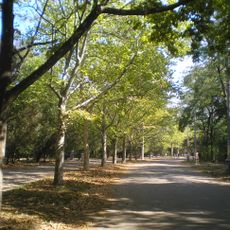
The observatory stands at Marazliivska Street 1v, inside Taras Shevchenko Park, on the grounds of Odesa University. Its main building is the round tower, and the site also holds the large astrograph and the Repsold meridian circle received from the Tiflis physical observatory in the late 19th century. The facility is a working research institute, so visits depend on staff arrangements.
On 18 October 1879, Eugen Block observed from the Odesa observatory and found the nebulae NGC 1398 and NGC 1360, later shown to have been discovered but never published. The observatory's plate archive holds about 100,000 glass plates, third in the world after Harvard (500,000) and Sonneberg (250,000).
The community of curious travelers
AroundUs brings together thousands of curated places, local tips, and hidden gems, enriched daily by 94,222 contributors worldwide.