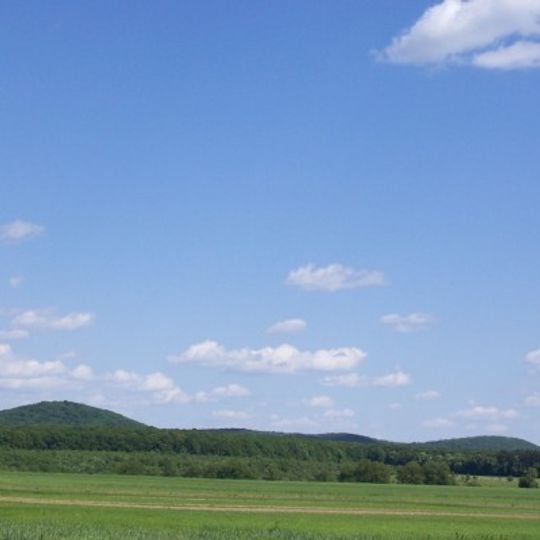
Bohyt, Archaeological site in Medobory, Ukraine
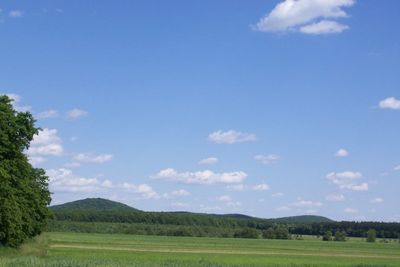
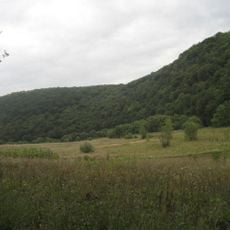
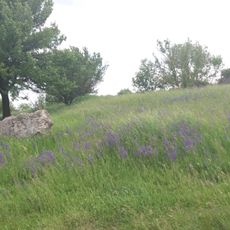
Bohyt is a hillfort-sanctuary on Mount Bohyt in the Medobory range, near Husiatyn. Its summit is enclosed by two ring ramparts and two cross ramparts, with stone cores from the 5th–6th centuries BCE. The site is about 300 m long and 50–100 m wide, divided into three parts: an entrance area, a central assembly ground of about 125 by 60 m, and a stone-paved eight-petalled platform about 15 m across with a square pit sized to the base of the Zbruch idol.
The site developed as a religious center starting in the 9th century and remained in use until the 13th century. During this period it served as a place where early Slavic communities gathered for their spiritual practices.
The name Bohyt likely comes from Svyatovit, the four-faced god whose idol stood here; a square pit in the stone altar matches the Zbruch idol's base. Eight sacrificial pits surrounded the pedestal, and a nearby oven baked ritual bread. Archaeologists link the site to al-Masudi's account of Slavic pagan temples.
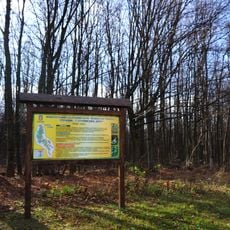
The site can be accessed through the Medobory Nature Reserve, which maintains the area. Visitors should wear sturdy footwear since the terrain is hilly and can be uneven in places.
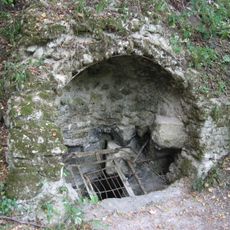
Away from the rampart stands a man-made dolmen of two upright stones and one horizontal slab, each pierced with holes. No datable material was found, so its age is open; one hypothesis links it to the Funnel Beaker culture. Two large pits cut into the rock, one nearly 5 m and the other over 6 m deep, held animal bones, 10th–12th-century pottery and fragments of glass bracelets.
The community of curious travelers
AroundUs brings together thousands of curated places, local tips, and hidden gems, enriched daily by 94,712 contributors worldwide.