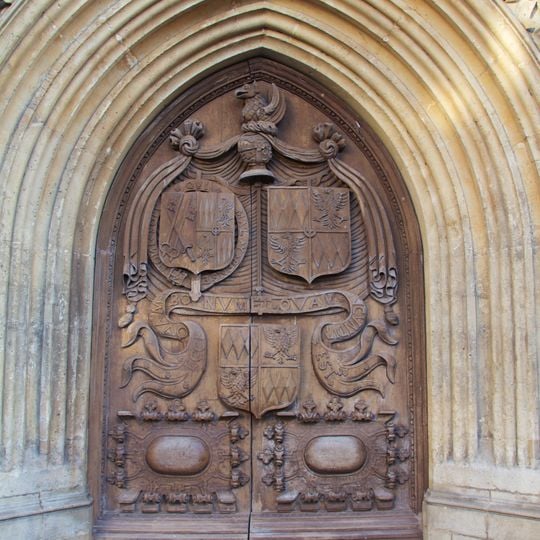
Bath Abbey, Grade I listed parish church in Bath, England
Bath Abbey is a parish church in Bath, England, built in the Gothic style with large windows that fill much of the wall space. The interior ceiling displays stone fan vaults, and the walls carry detailed stone carving that gives the space an open and bright character.
A monastery stood on this site from 757, where King Edgar received his crown in 973, setting the pattern for later English coronations. The current building arose after a vision by Bishop Oliver King in the late 15th century and took several decades to complete.
The abbey's memorials record Bath's social history: a plaque honours Isaac Pitman, inventor of the Pitman shorthand system, in the left aisle, and another near the crossing commemorates Richard "Beau" Nash, master of ceremonies in 18th-century Bath. The Book of Remembrance in the Gethsemane Chapel lists the names, surnames and ages of Bath civilians and servicemen who died in the Second World War.
Visitors can climb 212 steps to reach the tower platform, which offers views across the city and access to the bell chamber. The climb is narrow and requires some fitness, but the outlook at the top rewards the effort.
The west front shows stone ladders with angels climbing up and down, depicting the vision of Bishop Oliver King that inspired the rebuilding. This scene is one of the few architectural renderings of a dream in England.
The community of curious travelers
AroundUs brings together thousands of curated places, local tips, and hidden gems, enriched daily by 93,338 contributors worldwide.


