Ibrox Stadium, Football stadium in Ibrox district, Glasgow, Scotland
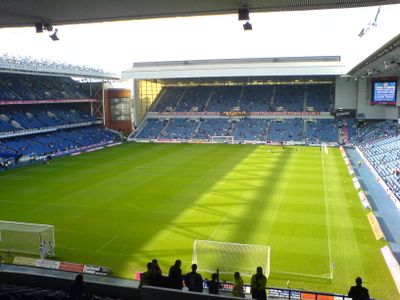
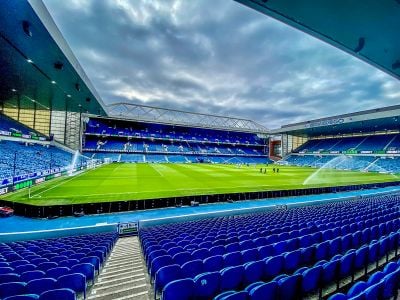
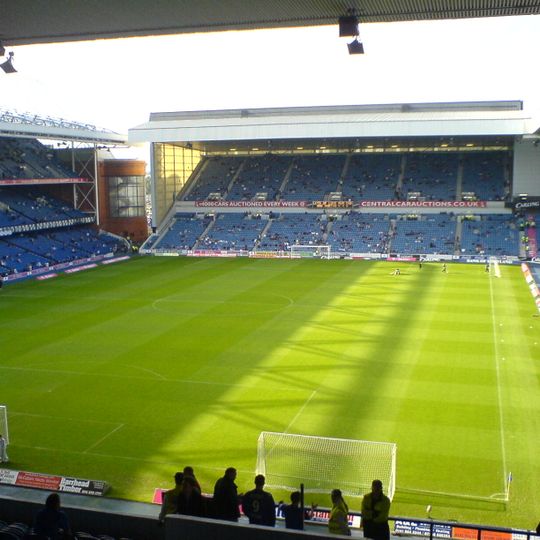
Ibrox Stadium is a football ground in the Ibrox area of Glasgow, Scotland, home of Rangers. Its rectangular pitch is enclosed by stands, the tallest being the main stand at one end, with a pale flat roof and a deep upper tier of blue seats split into sections above a lower tier; a white advertising board reading "CENTRALCARAUCTIONS.CO.UK" runs between the tiers. A low wall borders the pitch.
Ibrox Park opened on 30 December 1899 with a 3–1 win over Hearts, on a site Rangers had occupied since 1887. Archibald Leitch designed the wooden western terracing that collapsed on 5 April 1902 during Scotland v England, killing 25 people. Earthen slopes replaced it, and the red-brick Main Stand opened on 1 January 1929. After the 1971 disaster the bowl terracing gave way to three rectangular seated stands by 1981.
Home matches for Rangers form the center of local life in this part of Glasgow, where the color blue on shirts, scarves and flags shows fan allegiance. On match days thousands stream through the surrounding streets, singing songs and meeting in nearby pubs.
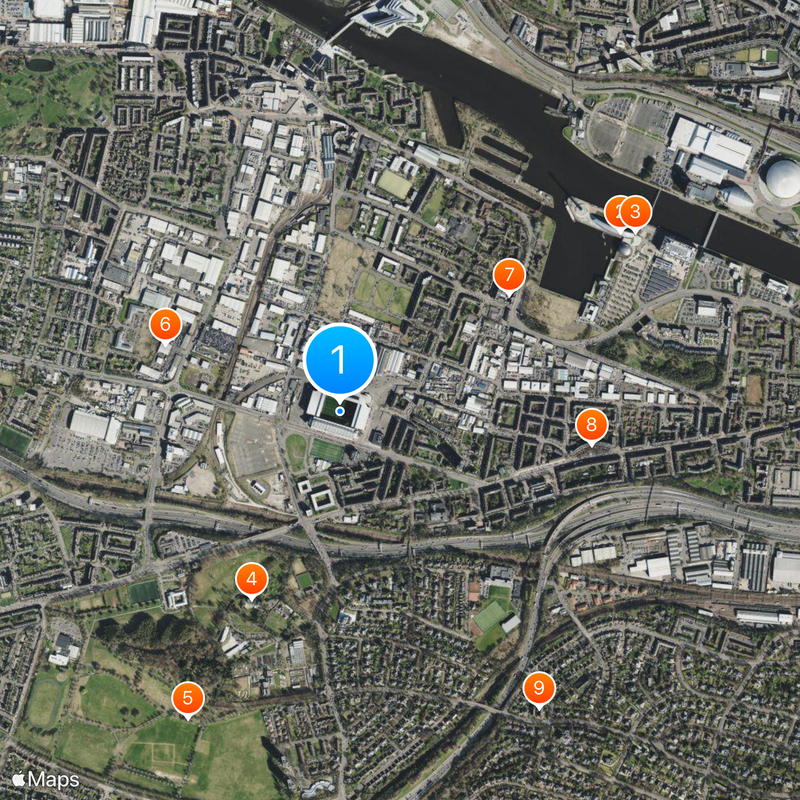
Ibrox is served by its own subway station on the Glasgow network, a short walk from the ground. The stadium lies south of the River Clyde in the Ibrox area, and the Main Stand faces the south side of the pitch. Visitors should note that the ground is an all-seated venue with a capacity of 51,700.
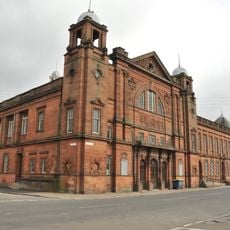
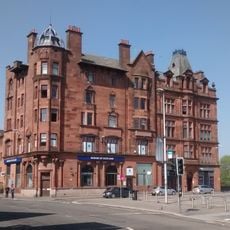
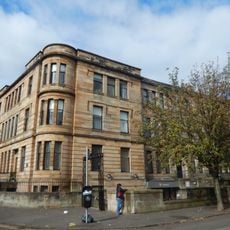
The main stand in red brick dates from 1928 and is protected as a listed building, preserving its original facade. While other sections were modernized, this side remains a witness to early stadium architecture.
The community of curious travelers
AroundUs brings together thousands of curated places, local tips, and hidden gems, enriched daily by 94,621 contributors worldwide.