Salisbury Cathedral, Anglican cathedral in Salisbury, England
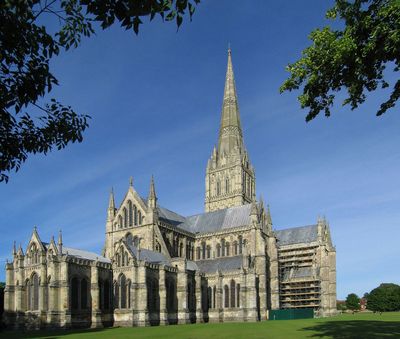
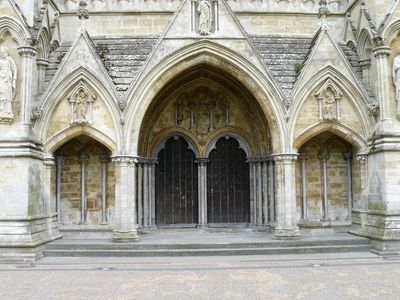
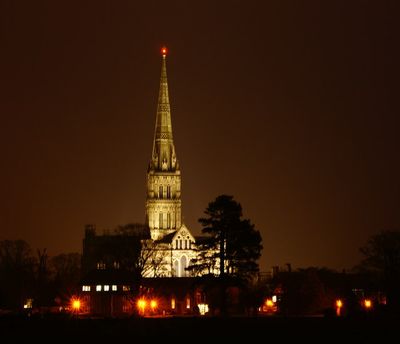
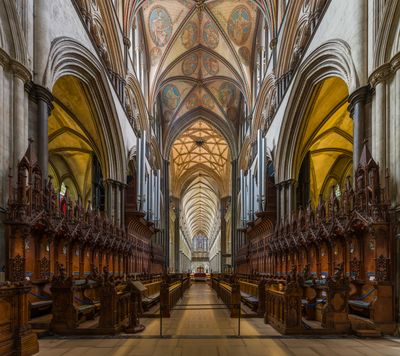
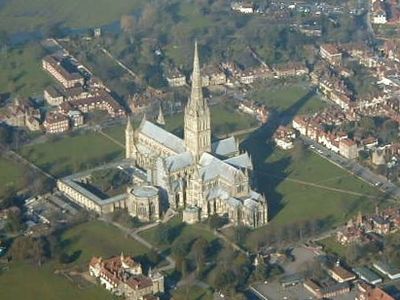
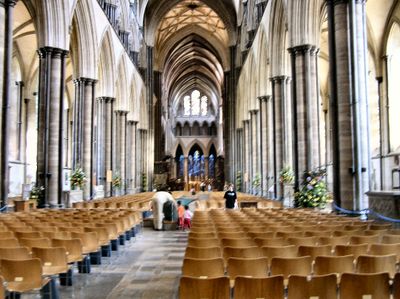
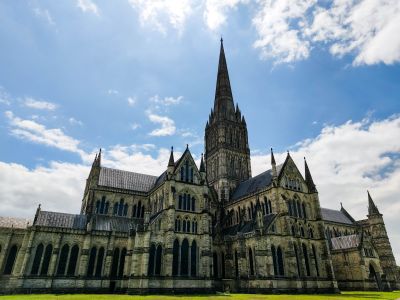
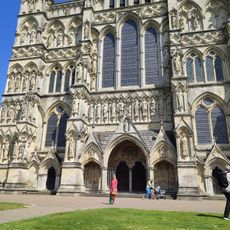
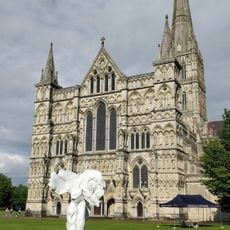
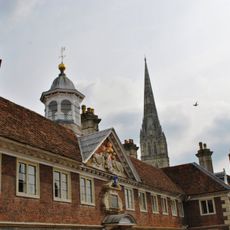
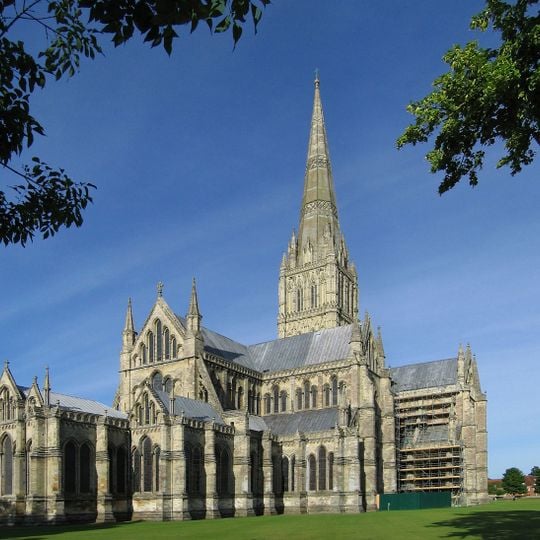
Salisbury Cathedral is an Anglican cathedral in the city of Salisbury in southern England, known for its slender church spire made of pale limestone that rises 123 meters (404 feet) into the air. The building stretches nearly 135 meters (443 feet) in length and displays consistent early Gothic forms with pointed arches and tall windows.
Construction began in 1220 after Bishop Richard Poore decided to move the church from Old Sarum to a more sheltered location near the River Avon. Work continued for roughly four decades and was completed faster than most medieval cathedrals of this size.
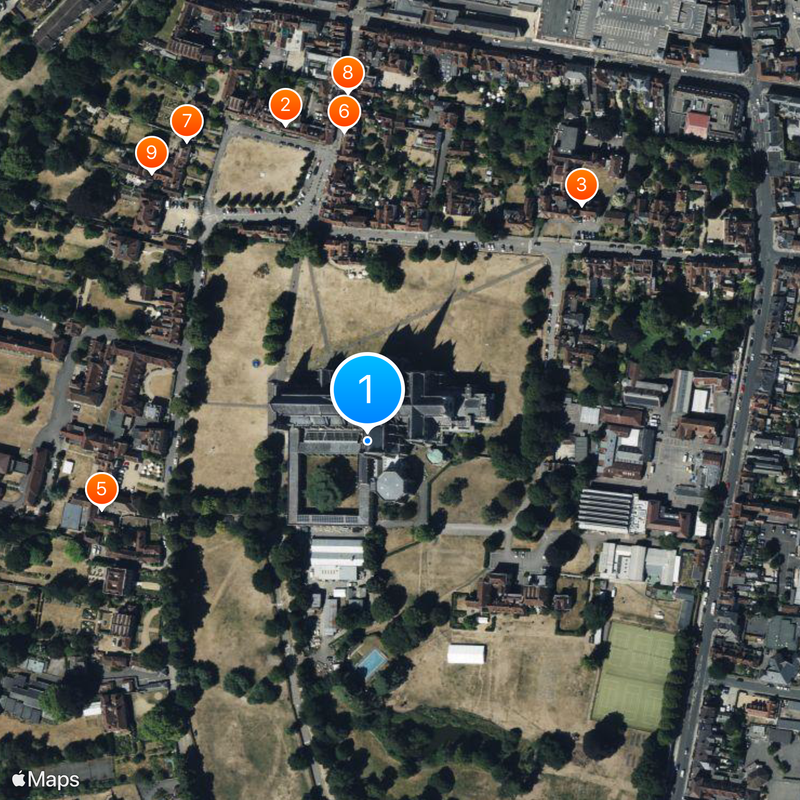
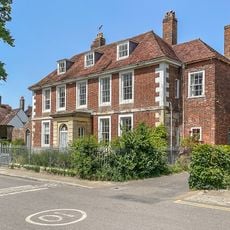
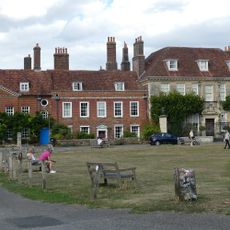
The name comes from nearby Sarum, the old English term for the earlier settlement on a windy hilltop. The cathedral now stands at the center of a quiet town, where locals walk through the surrounding grass area and visitors study the windows and stone arches.
Visitors can join guided tower tours that lead through narrow medieval spiral staircases with 332 steps to viewing platforms near the top. The tours run in good weather and require moderate physical fitness for the ascent.
Near the entrance sits a mechanical clock from 1386 that still works today and is considered the oldest surviving clockwork in the world. The building also keeps one of the four original copies of the Magna Carta from 1215 in a dedicated room.
The community of curious travelers
AroundUs brings together thousands of curated places, local tips, and hidden gems, enriched daily by 90,907 contributors worldwide.