Balmoral Castle, Royal residence in Aberdeenshire, Scotland
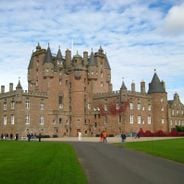
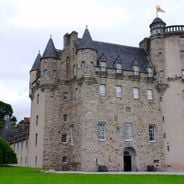
Balmoral Castle is a Scottish baronial house of pale grey granite, built from stone quarried at Invergelder on the estate. It consists of two interlocking three-storey square blocks around inner courtyards, with a 24-metre clock tower on the south-east side modelled on Craigievar Castle. The south-west block holds the official rooms and royal bedrooms, the north-west the kitchens and staff quarters; over 70 rooms in all.
A house existed at Balmoral by 1390, when Sir William Drummond built one; the Gordons later added a tower house. Prince Albert bought the estate in 1852, and William Smith designed the new castle, whose foundation stone was laid on 28 September 1853. The first section was ready in 1855, the whole in 1856, and the old house was then demolished.
The name Balmoral was first recorded as 'Bouchmorale' in 1451 and probably comes from Gaelic both, 'a hut'. The estate is a working one: grouse moors, forestry, farmland and herds of deer, Highland cattle, sheep and ponies, with about 50 staff year-round and more than double that in season.
Public visits take place from April to July in limited areas such as the ballroom and gardens, with advance booking required due to restricted numbers. Reaching the property works best by car via the A93, with parking provided on site and cafés available for refreshments during your stay.
The 24-metre clock tower on the south-east side was modelled on the tower of Craigievar Castle. The castle has over 70 rooms in two interlocking three-storey square blocks around inner courtyards, and since 1987 it has appeared on the back of the Royal Bank of Scotland's £100 note.
The community of curious travelers
AroundUs brings together thousands of curated places, local tips, and hidden gems, enriched daily by 92,190 contributors worldwide.