Silbury Hill, Prehistoric mound in Wiltshire, England
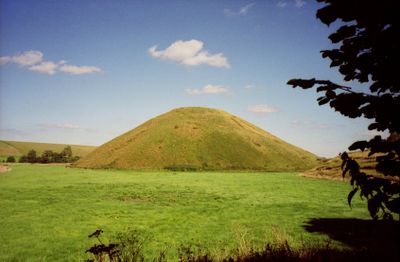
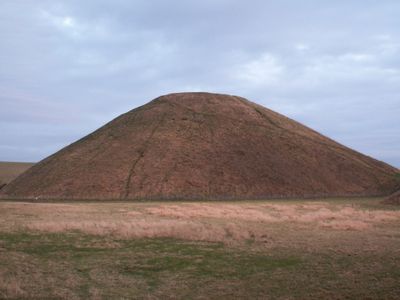
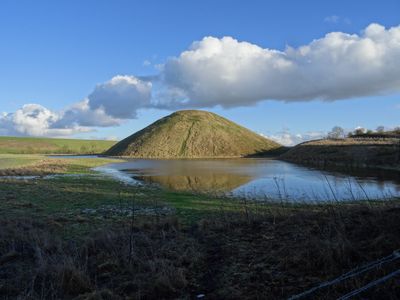
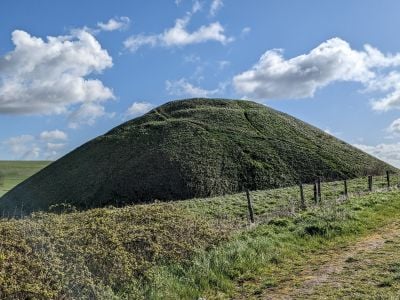
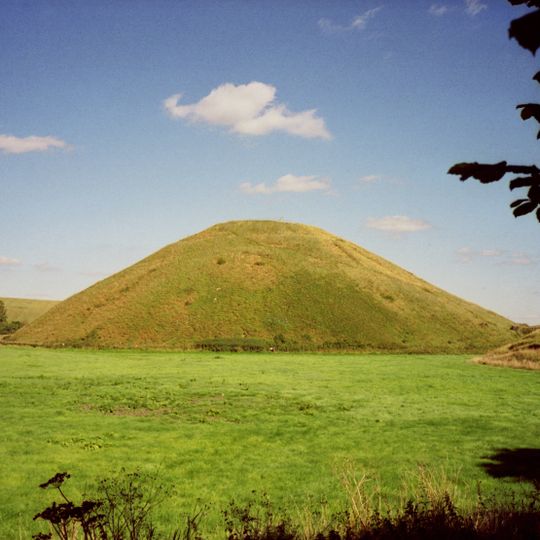
Silbury Hill is a conical chalk mound near Avebury, Wiltshire, standing 39.3 metres high with a circular base 167 metres across and a flat summit 30 metres wide. It was built in stages between about 2400 and 2300 BC from chalk and clay dug from surrounding ditches, and its chalk exterior once made it appear white. The summit was flattened in the medieval period to carry a building.
Silbury Hill was built in several stages between about 2400 and 2300 BC, starting with a gravel core held by stakes and sarsen boulders, then layers of chalk rubble and earth. Archaeologists estimate 18 million man-hours, equal to 500 men working 15 years, to move 248,000 cubic metres of fill. A radiocarbon date of c. 2490–2340 BC fixes the second phase to the Late Neolithic.
The name Silbury probably comes from Old English and was recorded as Seleburg, linking the mound to a nearby settlement. Local tradition holds that King Sil, a legendary ruler, was buried here with his horse, though no burial has ever been found. Visitors today see a grass-covered mound in an open field, with no inscription or marker on its surface.
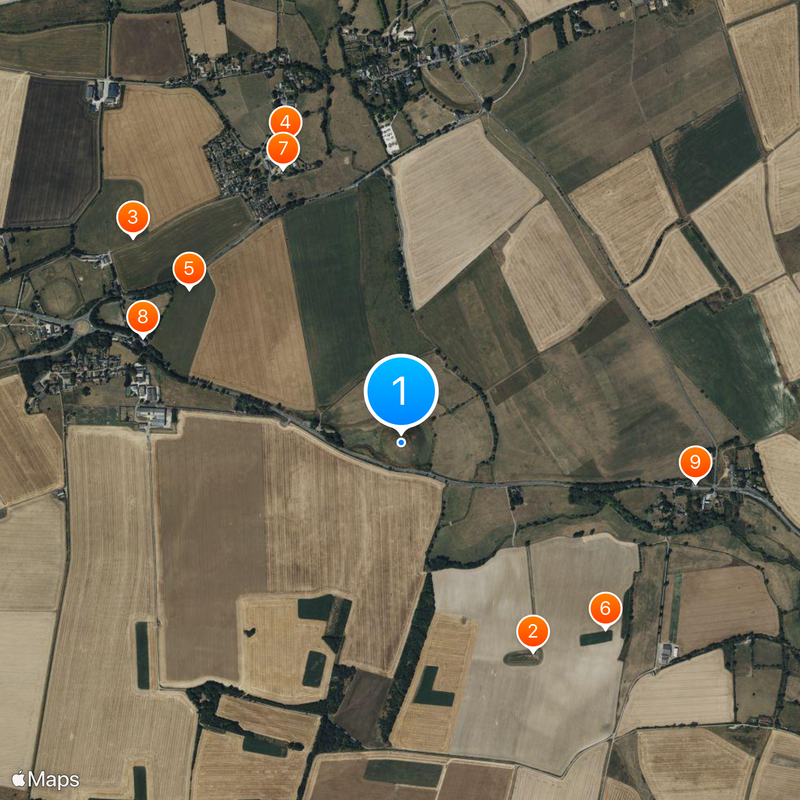
A small parking area beside the A4 allows a short walk to the viewing point where the mound is clearly visible. Climbing onto the surface remains forbidden to protect the structure.
Early excavations in the 18th century created tunnels inside that were later filled to prevent collapse. The first phase contained wooden posts and earth before reinforced chalk walls were added.
The community of curious travelers
AroundUs brings together thousands of curated places, local tips, and hidden gems, enriched daily by 93,340 contributors worldwide.