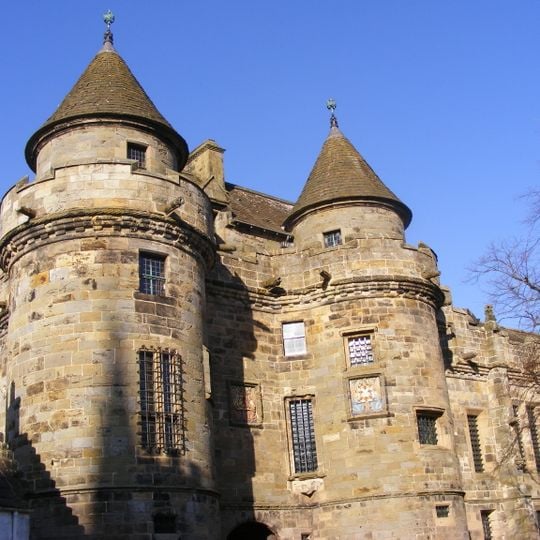
Falkland Palace, Renaissance country house in Falkland, Scotland.
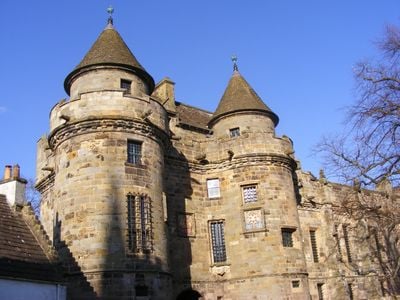
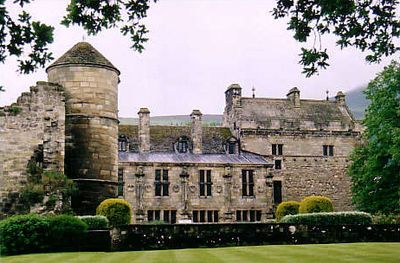
Falkland Palace is a Renaissance palace in Falkland, Fife, built of light grey ashlar around a courtyard, with a large round tower capped by a conical roof and rows of mullioned windows. James V added a south wing and gatehouse from 1537 using French masons, and a chapel was fitted out around 1540.
A MacDuff tower house stood here until English troops destroyed it in 1337; it was rebuilt and passed to the crown in 1424 after James I executed Murdoch Stewart. James II began converting it into a comfortable residence around 1451, and in 1455 it was first called a palace rather than a castle. James IV and James V rebuilt it in French Renaissance style from 1501, adding a south range and gatehouse around a courtyard.
Mary, Queen of Scots was fond of Falkland because it reminded her of her childhood in France. She played jeu de paume on the royal tennis court built in 1539, the oldest surviving court in Britain, and is said to have worn men's breeches to play. The Chapel Royal, dedicated to Thomas the Apostle, is reserved for Catholic worship.
The palace is open to visitors from April to October. The National Trust for Scotland acts as deputy keeper, and the property remains owned by the British Crown. The Chapel Royal is reserved for Catholic worship. The tennis court can be viewed but is not open for public play.
The tennis court built in 1539 remains the oldest court of its kind still in use anywhere, with matches played there regularly today. Few sports facilities worldwide have continued serving the same purpose for so many centuries without interruption.
The community of curious travelers
AroundUs brings together thousands of curated places, local tips, and hidden gems, enriched daily by 94,238 contributors worldwide.