Ludlow Castle, Medieval castle and house museum in Ludlow, England.
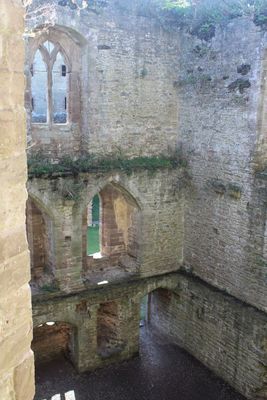
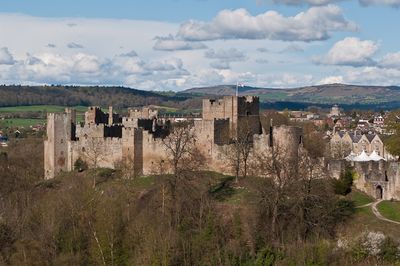
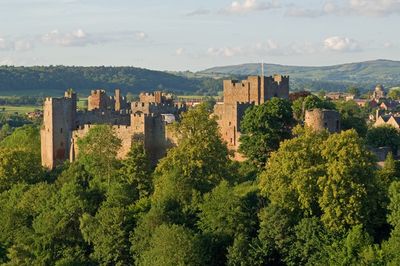
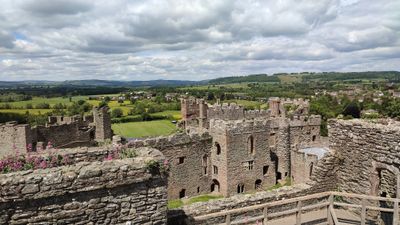
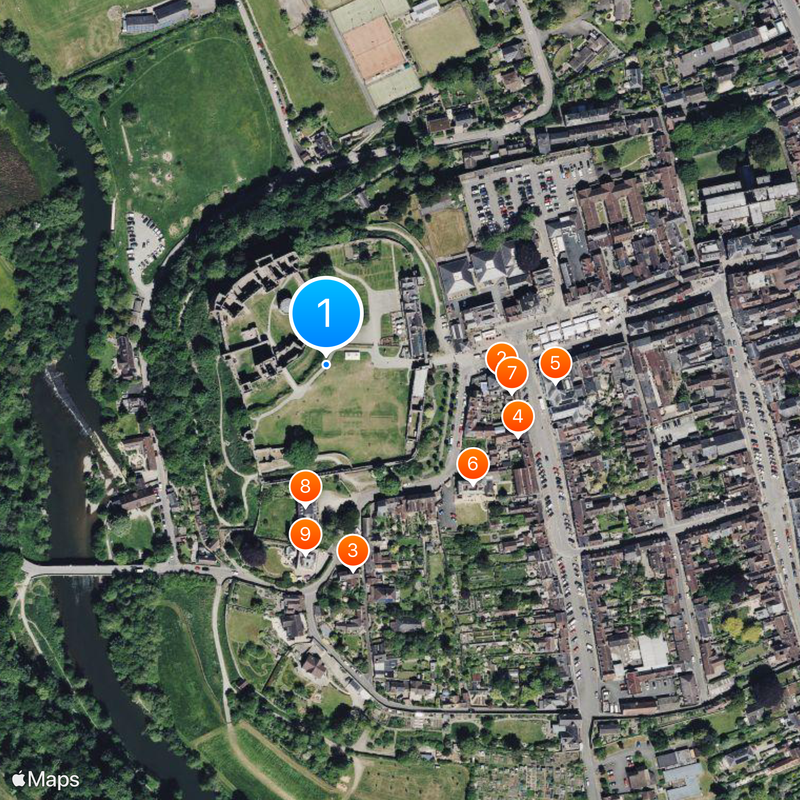
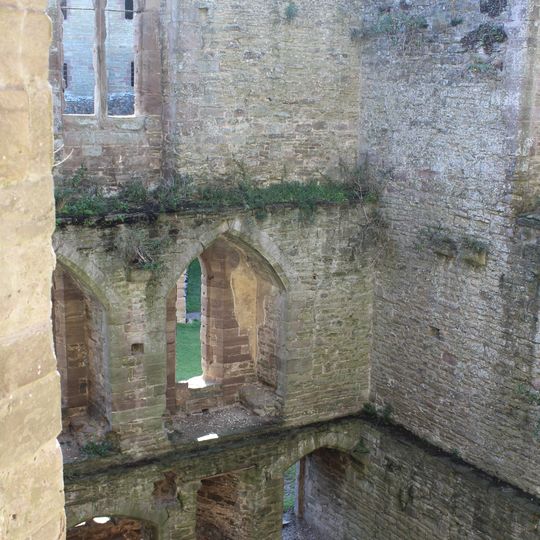
Ludlow Castle is a ruined medieval fortification in Ludlow, Shropshire, standing on a promontory above the River Teme. Its walls of rough grey and tan stone blocks retain pointed Gothic arches, a window divided by a vertical mullion, and a low stone ledge where plants grow. The inner bailey, cut off by a rock-cut ditch, holds the Great Tower, Great Hall, and a rare circular chapel modelled on the Holy Sepulchre in Jerusalem.
Walter de Lacy probably founded Ludlow Castle around 1075, one of England's first stone castles, on a promontory above the River Teme. In the 12th-century civil war it changed hands repeatedly and gained a Great Tower and large outer bailey. Roger Mortimer acquired it in 1301, and Richard, Duke of York, inherited it in 1425. It became the seat of the Council of Wales and the Marches, was taken by Parliamentarians in 1646, and fell into neglect after the council was abolished in 1689.
The name comes from Old English hlud-hlaw, meaning loud hill, referring to the rock above the river. Inside the courtyard, theater performances and concerts take place regularly, continuing a long tradition of public events.
Access is through a path leading uphill from the town, with steps and uneven surfaces throughout the grounds. On sunny days, the walk around the walls offers wide views over the surrounding countryside and river valley.
The circular chapel in the inner bailey was modelled on the shrine in the Church of the Holy Sepulchre in Jerusalem, a rare form in England. The castle also hosted the first performance of John Milton's masque Comus in the 17th century.
The community of curious travelers
AroundUs brings together thousands of curated places, local tips, and hidden gems, enriched daily by 93,379 contributors worldwide.