Banqueting House, Renaissance banqueting house in City of Westminster, England
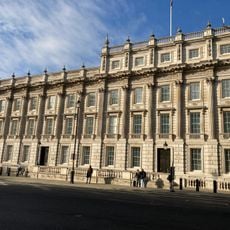
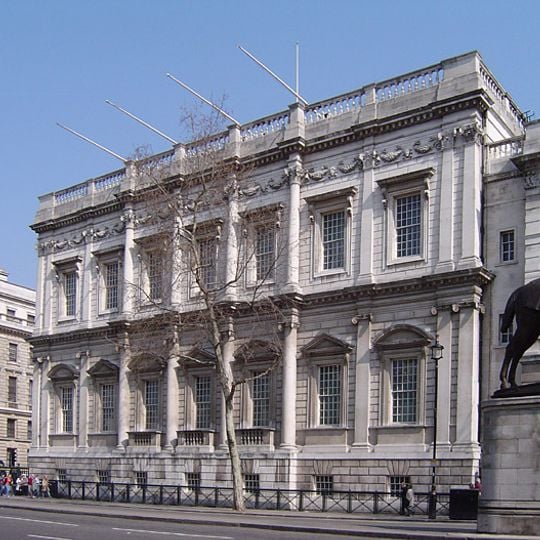
Banqueting House is a Renaissance building in the City of Westminster, London, designed in Palladian style. The main hall rises to a double height with regularly spaced columns along the walls and a vaulted basement beneath.
Inigo Jones designed the building between 1619 and 1622 as part of the royal Palace of Whitehall. Charles I walked through the hall to an outdoor scaffold for his execution in 1649, stepping from one of the central windows.
The ceiling canvases were painted by Peter Paul Rubens and his workshop between 1630 and 1634, for which Rubens received £3,000 and a knighthood. The oval centre shows the apotheosis of James I; a neighbouring panel has Minerva crowning Charles I. A bust over the entrance commemorates Charles's execution outside the building.
The hall is reached from Whitehall, with the entrance set beneath the rusticated ground floor; the double-height banqueting hall occupies the whole footprint above it. Allow time to walk the gallery circuit, since the Rubens canvases are set into the ceiling and best read from the upper level. The building is cared for by Historic Royal Palaces, an independent charity.
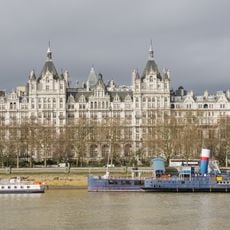
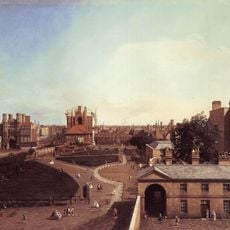
This building is the sole surviving part of the Palace of Whitehall, which served as the main London residence for English monarchs until 1698. A fire destroyed the rest of the sprawling complex along the Thames at that time.
The community of curious travelers
AroundUs brings together thousands of curated places, local tips, and hidden gems, enriched daily by 93,375 contributors worldwide.