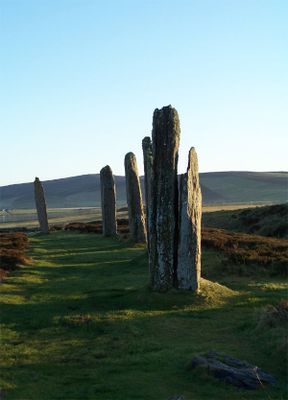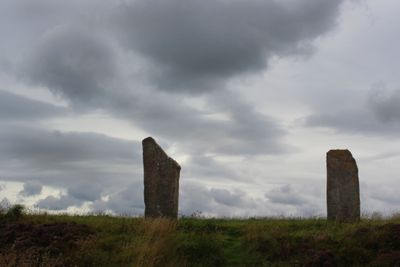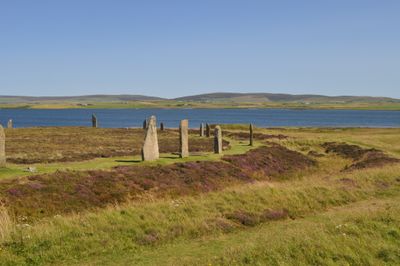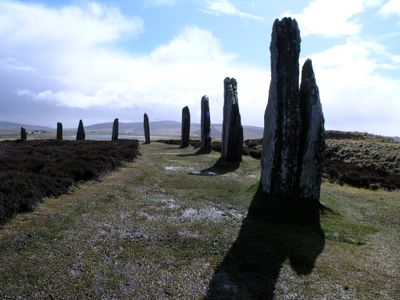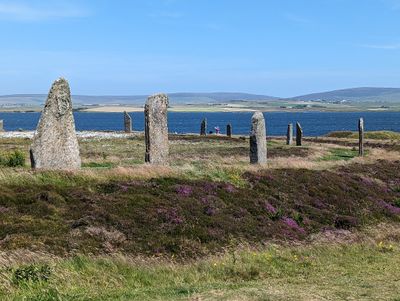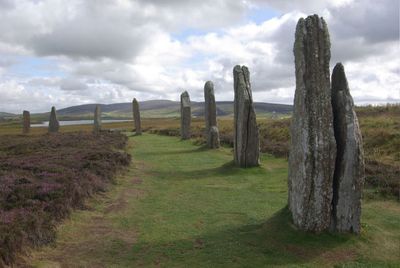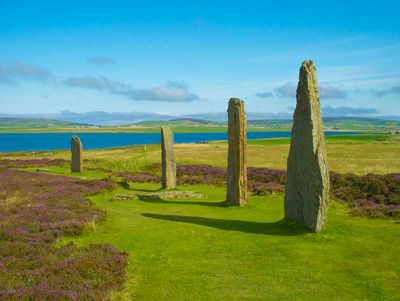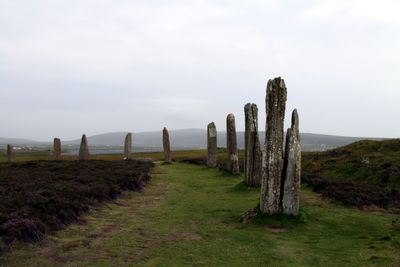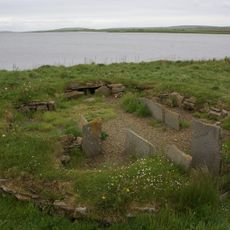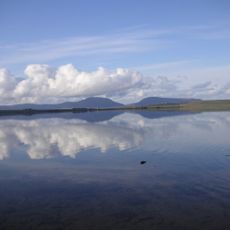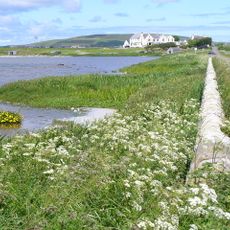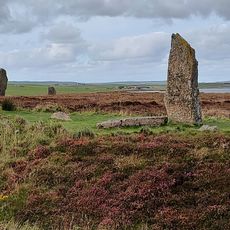
Ring of Brodgar, Neolithic stone circle in Orkney Islands, Scotland
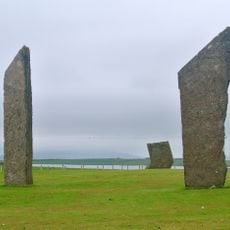
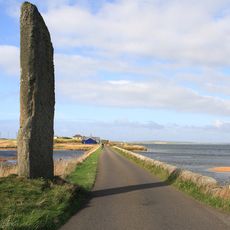
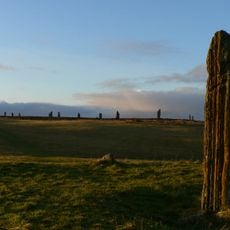
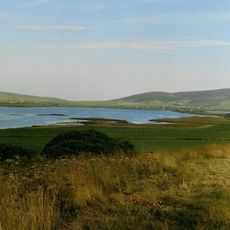
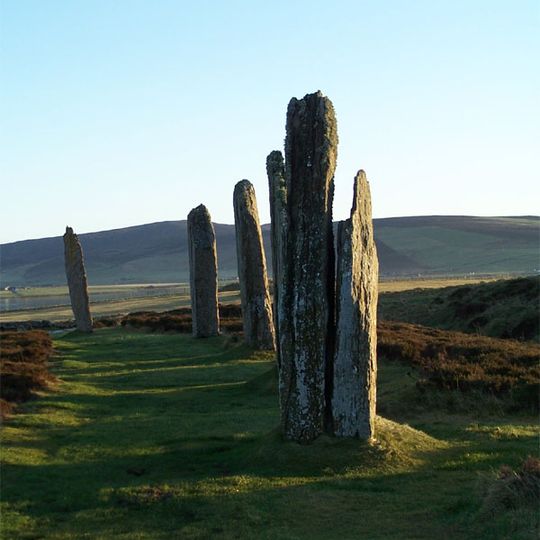
The Ring of Brodgar is a stone circle measuring about 104 meters across, surrounded by a deep rock-cut ditch between two lochs. Of the original 60 standing stones, 27 remain upright in their original positions today.
The circle was built around 2500 BCE during the Neolithic period and belongs to a series of major stone monuments on the Orkney Islands. This era was crucial for the development of complex societies in northern Scotland.
The stone circle is part of a World Heritage site and shows how Neolithic people shaped and used their land. Visitors can sense the purpose today – this was clearly a place where communities gathered together for important occasions.
The site is accessible year-round, with level paths that make it easy to explore. The location is remote, so plan to spend time here and come prepared for changing weather.
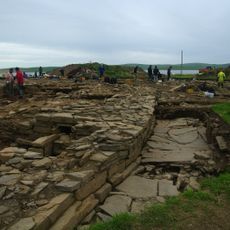
Excavations nearby uncovered a massive stone wall about 100 meters long and 6 meters high, revealing that large building structures once stood here. This discovery changed our understanding of how complex Neolithic life actually was.
Location: Orkney Islands
Location: Stenness
Accessibility: Wheelchair accessible
Part of: Heart of Neolithic Orkney
GPS coordinates: 59.00148,-3.22972
Latest update: December 6, 2025 16:00
Circular architecture has fascinated builders since ancient times. This collection brings together Roman amphitheatres like the Colosseum, medieval towers such as the Round Tower in Copenhagen, baroque domed structures and modern constructions. The circular form offers practical advantages for acoustic properties, structural stability and optimal space usage. The selected buildings serve various functions: religious temples, fortifications, observatories, museums and event venues. Each example demonstrates how architects have adapted the circular form to local conditions and cultural requirements. From ancient stone structures to contemporary skyscrapers, this selection documents technical evolution across centuries.
Stone circles stand among humanity's earliest architectural accomplishments, constructed by prehistoric communities across Europe and beyond over thousands of years. These circular arrangements of standing stones served multiple purposes, functioning as astronomical observatories where ancient peoples tracked celestial movements, seasonal changes, and solar events. The monuments also acted as communal gathering spaces for ceremonies, trade, and social activities. The engineering skills required to transport, raise, and position these massive stones—some weighing several tons—reveal the sophisticated organizational capabilities and technical knowledge of Neolithic and Bronze Age societies. This collection spans numerous locations throughout Europe. In England, Stonehenge features precisely arranged upright stones forming a 98-foot (30-meter) circle built between 3000 and 2000 BC, while the Avebury complex measures 1,086 feet (331 meters) across and dates to 2850 BC. Scotland hosts several significant sites, including the Callanish Stones with a central monolith standing 16 feet (4.8 meters) tall, and the Ring of Brodgar, which originally contained 60 stones encircled by a 30-foot (9-meter) wide ditch. The Castlerigg Stone Circle sits surrounded by Lake District peaks, constructed around 3000 BC. Beyond the British Isles, Germany's Goseck Circle demonstrates astronomical alignment dating to 4900 BC, making it one of the oldest known structures of its kind. Ireland's Drombeg Stone Circle uses 17 stones to mark solstice positions. Each site provides insight into how prehistoric communities observed the heavens, marked time, and organized their societies around these enduring monuments.
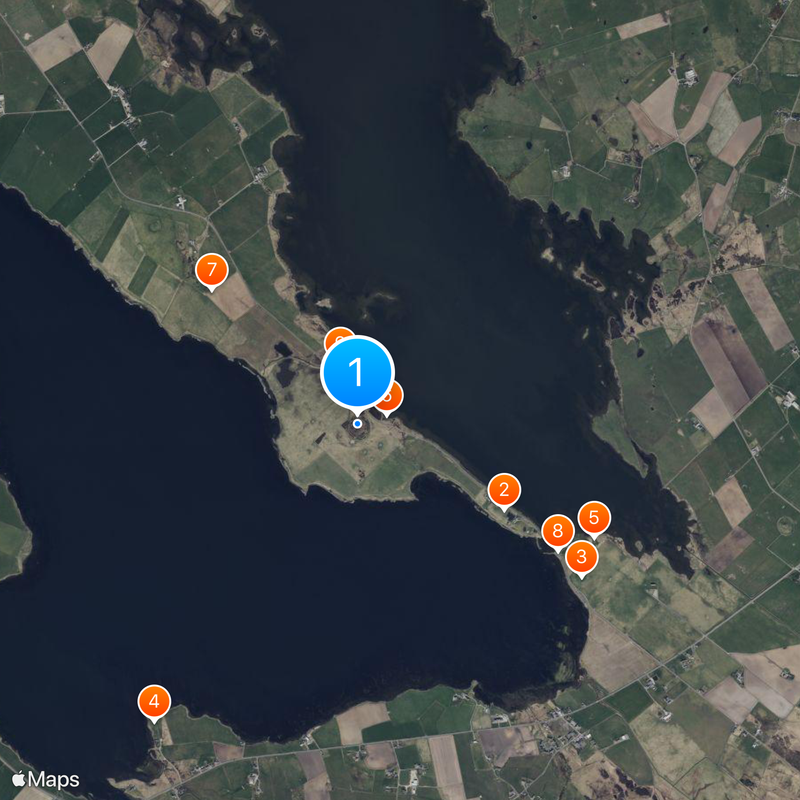
Maes Howe
2.4 km
Ness of Brodgar
941 m
Stones of Stenness
1.5 km
Heart of Neolithic Orkney
2.4 km
Unstan Chambered Cairn
2.1 km
Barnhouse Settlement
1.5 km
Loch of Harray
2.5 km
Happy Valley
4.5 km
Tormiston Mill
2.6 km
Mill Of Ireland
3.6 km
Watch Stone
1.3 km
Comet Stone
187 m
Ness of Brodgar
933 m
Stromness, 8 Victoria Street, Warehouse
5.7 km
Stenness Church
1.9 km
Bridge of Waithe
2.5 km
John Rae statue
5.8 km
Knowe of Onston,or Unstan,chambered cairn
2 km
Burrian,broch W shore of Loch of Harray
2.1 km
Mill Of Rango, Sandwick
5.6 km
5-9 Victoria Street, Stromness
5.7 km
Brodgar RSPB Reserve
196 m
Bankburn
4.3 km
Harbour Office, 16 Victoria Street, Stromness
5.8 km
Royal Bank Of Scotland, 1, 3 Victoria Street, Stromness
5.7 km
Buckan, enclosure 150m N of
1.7 km
Bridge of Brodgar
1.2 km
Binscarth House
5.4 kmReviews
Visited this place? Tap the stars to rate it and share your experience / photos with the community! Try now! You can cancel it anytime.
Discover hidden gems everywhere you go!
From secret cafés to breathtaking viewpoints, skip the crowded tourist spots and find places that match your style. Our app makes it easy with voice search, smart filtering, route optimization, and insider tips from travelers worldwide. Download now for the complete mobile experience.
A unique approach to discovering new places❞
— Le Figaro
All the places worth exploring❞
— France Info
A tailor-made excursion in just a few clicks❞
— 20 Minutes