Malmesbury Abbey, Former Benedictine abbey and parish church in Malmesbury, England
Malmesbury Abbey is a medieval monastery church in the English town of Malmesbury in Wiltshire. Built from pale stone, the church displays several arches with fine carvings, and its south entrance holds reliefs of biblical scenes dating from the 12th century.
Aldhelm founded Malmesbury as a Benedictine monastery around 676, not a priory, and it became a centre of learning under abbots including John Scotus Eriugena and Aelfric of Eynsham. Æthelstan, regarded as the first king of England, was buried here in 941. The Norman church was substantially complete by 1180; the spire and tower collapsed around 1500 and the west tower fell around 1550, leaving less than half the original building. Henry VIII closed the abbey in 1539 and sold it to William Stumpe.
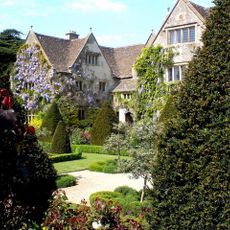
The abbey is dedicated to Saints Peter and Paul, while the town takes its name from Máel Dub, the Irish monk whose hermitage preceded it. Æthelstan, buried here in 941, is commemorated by an empty 15th-century tomb in the north aisle; William of Malmesbury records that the body was moved in the 11th century to the abbot's garden, now Abbey House Gardens. In the churchyard lies Hannah Twynnoy, a barmaid killed by a tiger on 23 October 1703, her grave carved with a poem.
The church is open daily to visitors and also serves as the parish church for regular worship. Guided tours explain the building history and the remaining Norman features, with most areas accessible without steps.
In the early 11th century, the monk Eilmer jumped from the abbey tower with homemade wings and flew roughly 200 meters (656 feet) before breaking both legs on landing. This attempt is considered the first documented human gliding experiment in history.
The community of curious travelers
AroundUs brings together thousands of curated places, local tips, and hidden gems, enriched daily by 94,651 contributors worldwide.