Caerphilly Castle, Medieval castle in Caerphilly, Wales
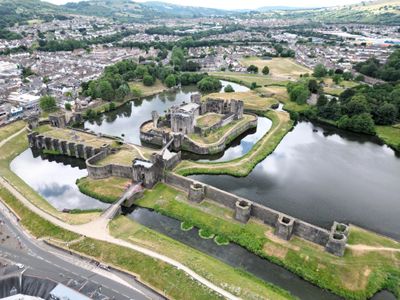
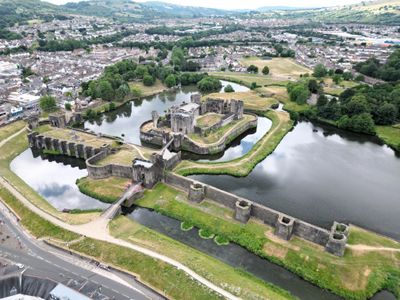
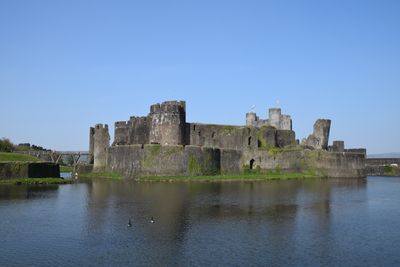
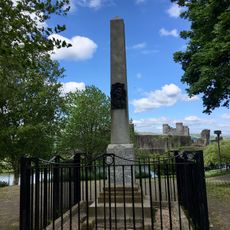
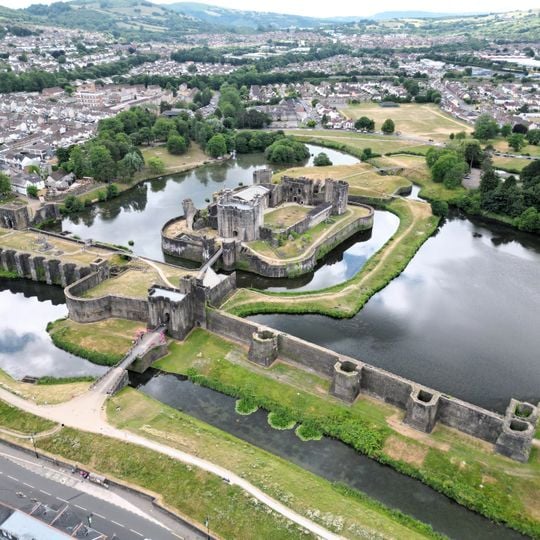
Caerphilly Castle is a medieval fortification in the Welsh town of the same name, with double rings of walls and broad moats on all sides. The heart sits on an artificial island, surrounded by defensive towers and heavy gatehouses that once linked by drawbridges.
Gilbert de Clare began the castle in 1268 to control northern Glamorgan against Llywelyn ap Gruffudd, who burned the unfinished site in 1270; work resumed and withstood a siege in 1271. The castle was attacked in the Madog ap Llywelyn revolt of 1294 and the Llywelyn Bren uprising of 1316. By the 16th century the lakes had drained and the walls were robbed of stone; the Marquesses of Bute restored it from 1776, and in 1950 it passed to the state and the water defences were re-flooded.
The name comes from the Welsh "Caerffili", meaning "fort" or "castle" of the local commote. Gilbert de Clare, nicknamed "Red Gilbert" for his hair, founded the castle in 1268. Today Cadw runs the site, and the re-flooded lakes draw anglers and walkers; the great gatehouses are the largest in Britain.
Access is possible year-round, usually from morning until afternoon depending on the season. Visitors can explore the walls and inner courts on foot, with sturdy shoes helpful on uneven stones.
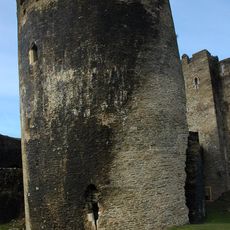
The south-east tower leans because its base was undermined, and the tilt is often compared to the Tower of Pisa. The castle's water defences were called "the most elaborate water defences in all Britain" by historian Allen Brown.
The community of curious travelers
AroundUs brings together thousands of curated places, local tips, and hidden gems, enriched daily by 93,387 contributors worldwide.