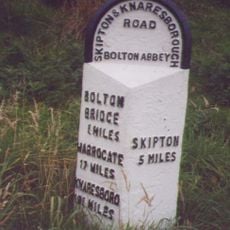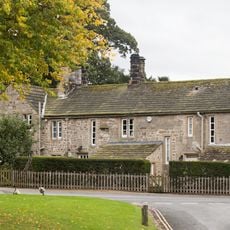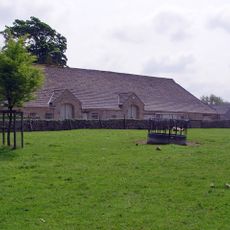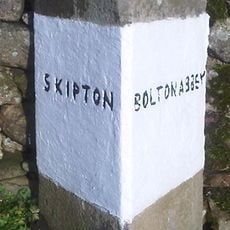
Bolton Abbey, Medieval monastery ruins in North Yorkshire, England
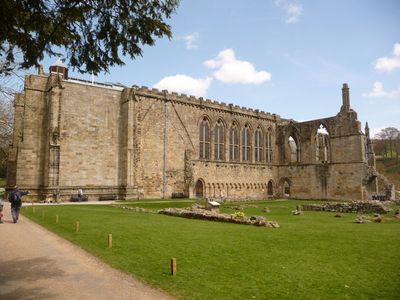
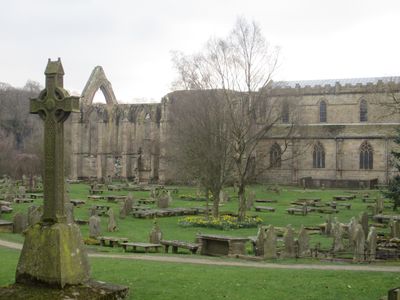
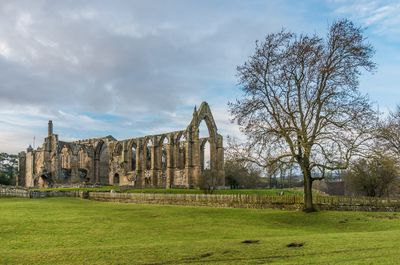
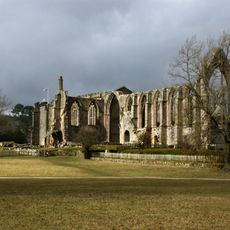
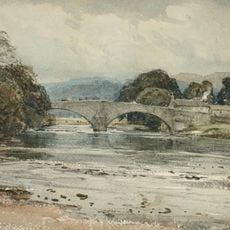
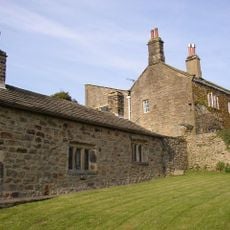
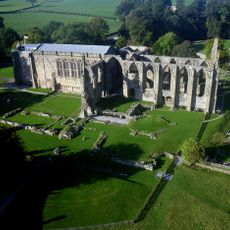
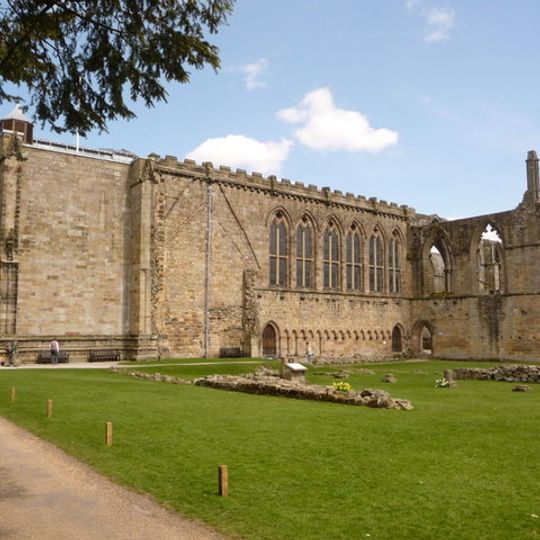
Bolton Abbey is a medieval monastery in Bolton Abbey, North Yorkshire, England, with stone ruins stretching along the bank of the Wharfe and preserving parts of the church nave. The masonry shifts between rough fragments and soaring walls with empty window frames beneath which grass and gravestones lie.
The monastery was founded at Embsay in 1120 and moved to Bolton in 1154, when Lady Alice de Romille of Skipton Castle granted the land to Augustinian canons. Scottish raids in the early 14th century caused serious damage and temporary abandonment. The priory was dissolved in January 1540, but the nave had served as the parish church since about 1170 and survived.
The name Bolton Abbey is a misnomer: the community was led by a prior and was technically a priory. The medieval nave serves as the parish church of St Mary and St Cuthbert, with services on Sundays and religious holidays. The churchyard holds the grave of cricketer Fred Trueman and a First World War war grave of a Royal Flying Corps officer.
Solid footwear is advisable, as some paths are uneven and steps lead between the ruins. In summer, the meadows around the abbey are easy to walk, while in winter damp ground and riverbanks may become slippery.
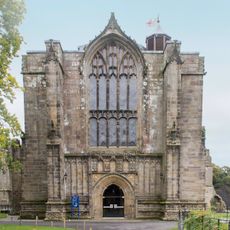
The west tower was never completed and remained as a broad stump, later serving as a bell tower. Today, this unfinished tower forms the main entrance to the church still in use.
The community of curious travelers
AroundUs brings together thousands of curated places, local tips, and hidden gems, enriched daily by 94,475 contributors worldwide.