Fort Ticonderoga, Star fort in Ticonderoga, United States.
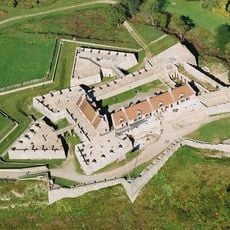
Fort Ticonderoga is a star-shaped military installation where Lake Champlain meets Lake George in upstate New York. Its diamond-shaped walls project outward from the main structure, creating overlapping firing lines that cover every approach to the fort.
French troops built Fort Carillon between 1755 and 1757 as an outpost during conflicts with British colonial forces over control of the Champlain Valley. After British capture in 1759, the site received its current name and changed hands several times during the War of Independence.
The name Ticonderoga comes from the Mohawk word tekontaró:ken, meaning "it is at the junction of two waterways". The French called the site Carillon, after the bell-like sound of the La Chute rapids. The fort's museum holds 18th-century military artifacts, and costumed interpreters demonstrate camp life.
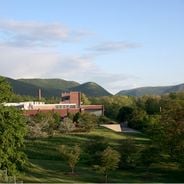
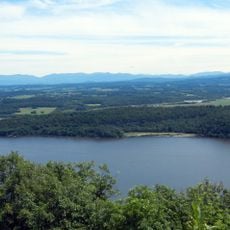
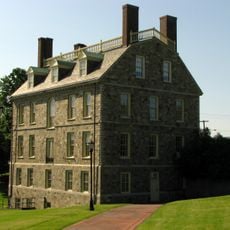
The fort stands on a rise above the narrows at the south end of Lake Champlain, with Mount Defiance (260 m) and Mount Independence overlooking it. The star-shaped ramparts and gravel courtyards are explored on foot, and the restored West Barracks opened to the public in 1909. The site is operated as a museum and research center by the Fort Ticonderoga Association.
Cannons from the site traveled over 300 miles (483 km) to Boston in a winter expedition during 1775. This artillery eventually forced British troops to abandon the city and gave American rebels a decisive advantage.
The community of curious travelers
AroundUs brings together thousands of curated places, local tips, and hidden gems, enriched daily by 92,394 contributors worldwide.