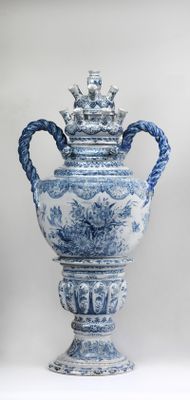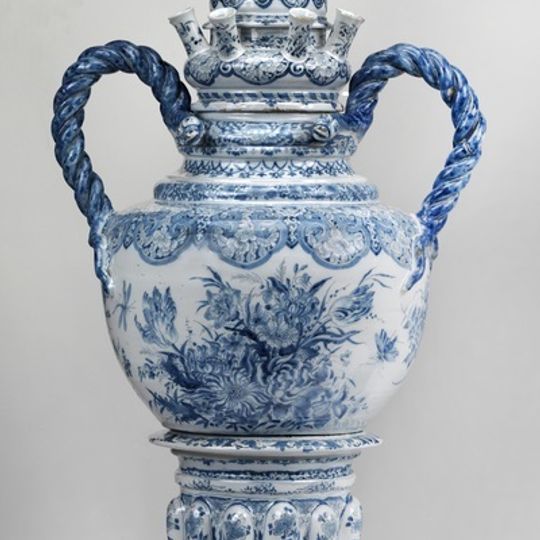
Flower-holder, Faience tulip vase at Prinsenhof Museum, Netherlands
This flower-holder is made of faience, porcelain, and earthenware with multiple spouts arranged in a pyramid shape to display individual tulips. The vessel stands about 102 centimeters tall and measures roughly 52 centimeters wide, making it a substantial display piece for showing off flowers.
This vessel was made in 1690 by the De Grieksche A workshop during a period when tulips held significant economic value in the Dutch lands. The creation of specialized containers shows how important the flower trade and display had become.
This vessel shows how Dutch potters combined three different materials to create functional art for displaying valuable flowers. The mixing of faience, porcelain, and earthenware reveals what craftspeople knew about working with ceramics during that period.
Viewing this piece from the front gives the best sense of its full pyramid shape and all the individual spouts. Taking time to walk around it at different distances helps you notice the craftsmanship details and how the materials work together.
The many spouts on this holder let people arrange several kinds of tulips at the same time for a colorful display. This design became so successful that similar containers quickly became a must-have in wealthy households throughout the region.
The community of curious travelers
AroundUs brings together thousands of curated places, local tips, and hidden gems, enriched daily by 92,785 contributors worldwide.