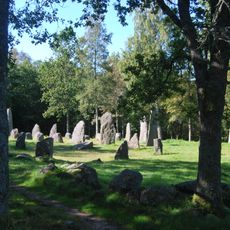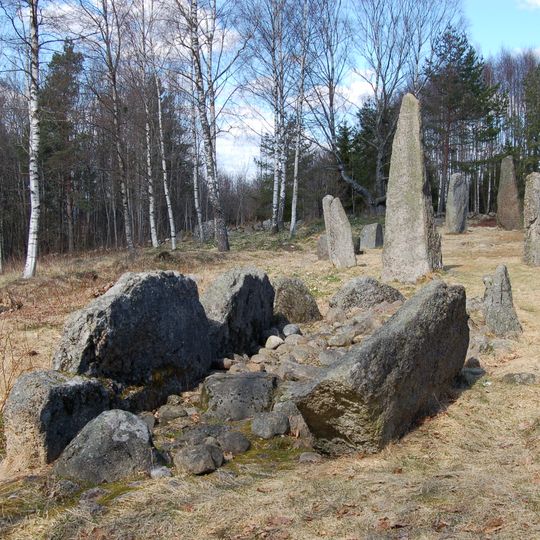
Istrehågan, Iron Age cemetery in Jåberg, Norway
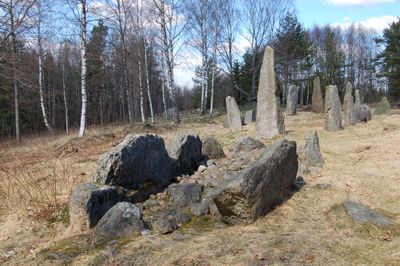
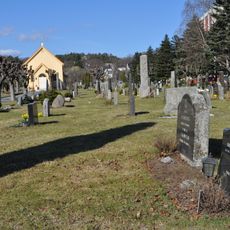
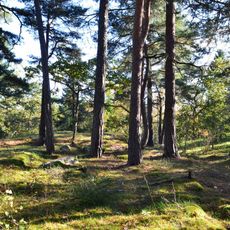
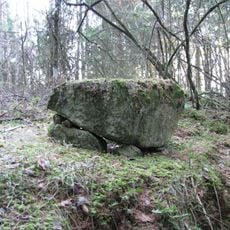
Istrehågan is an Iron Age burial ground with stone formations shaped like ships, the largest reaching 24 meters in length and 9 meters in width. These structures are scattered across the hillside and form distinctive patterns that reflect the scale and importance of this ancient cemetery.
The burial ground dates to the Roman Iron Age and was excavated between 1959 and 1961, yielding finds such as bones, bear claws, pottery fragments, and a brooch. These discoveries confirm that the site served as an important cemetery and ritual center across generations.
The stone settings here reflect burial practices found in the British Isles, showing ancient connections between Nordic and insular cultures. Visitors can observe how these formations shaped the landscape and the role they held in the lives of the people who created them.
The site is accessible via marked hiking trails through the Marum forest, with one route starting from Store Bergan school. The terrain is exposed, so visitors should be prepared for changing weather conditions.
The site contains agricultural symbols that date back 3500 years, showing that this was both a burial place and an early record of farming practices. This connection between burial ritual and farming culture is rare among northern archaeological sites.
The community of curious travelers
AroundUs brings together thousands of curated places, local tips, and hidden gems, enriched daily by 92,420 contributors worldwide.