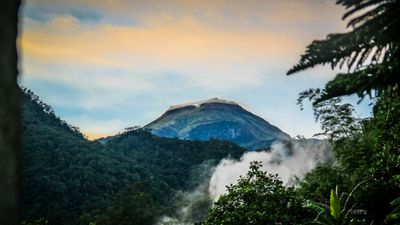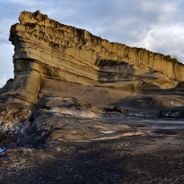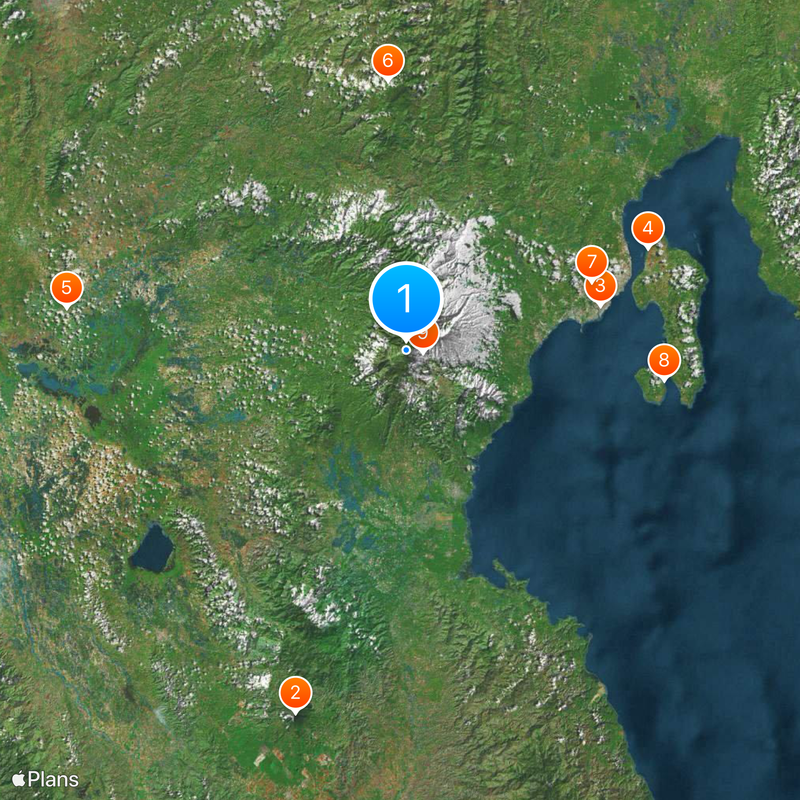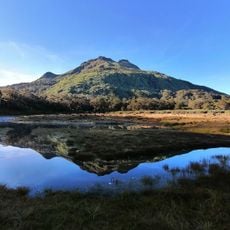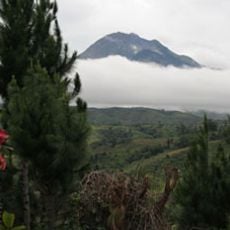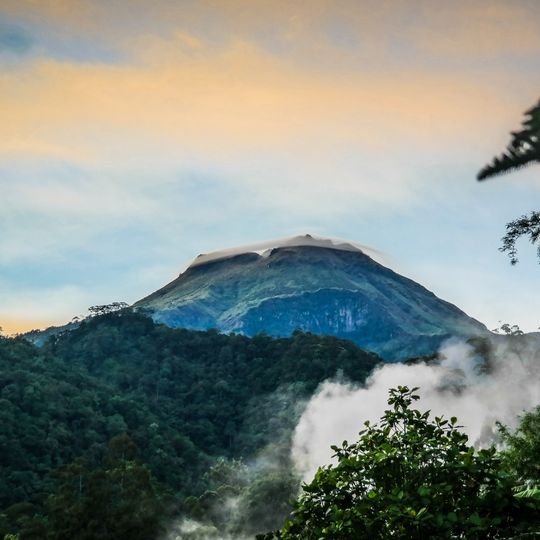
Mount Apo, Dormant stratovolcano on the Davao–Cotabato border, Mindanao, Philippines
This peak rises across several provinces in Mindanao and reaches nearly three thousand meters above sea level. Dense rainforest covers the lower slopes and gives way to moss forest and alpine grassland at higher elevations.
President Manuel L. Quezon declared Mount Apo a national park on May 9, 1936. Republic Act No. 9237 of February 3, 2004, made it a protected area as a Natural Park covering 54,974.87 hectares. The mountain has no recorded historical eruptions and was once wrongly named the source of Mount Melibengoy's 1641 eruption.
The name Apo is a title of respect meaning "revered elder" among the Lumad peoples, shortened from Apo Sandawa, the spirit of the mountain. Manobo and Kalagan groups such as the Obo, Bagobo and Tagabawa regard Apo Sandawa as an ancestor spirit, and the diwata, the supreme walyan or shaman, conducts rituals to him as medium for the mountain's spirit.
Hikers should hire a guide from one of the surrounding towns since weather can shift quickly and trail markers are sparse in some sections. Physical preparation helps with the steep sections and the shifting temperatures between base and summit.
A line of solfataras runs from the southeast flank at 2,400 metres up to the summit, and the southwest peak holds a crater 200 metres wide with a small lake inside. The mountain has no recorded historical eruptions; the 1641 eruption of Mount Melibengoy was once wrongly blamed on Apo.
The community of curious travelers
AroundUs brings together thousands of curated places, local tips, and hidden gems, enriched daily by 93,650 contributors worldwide.